What Are The Top 3 European Countries To Visit?
The three European countries that appear most often across 21 verified multi-country tour packages, and what a two week route through them actually costs.
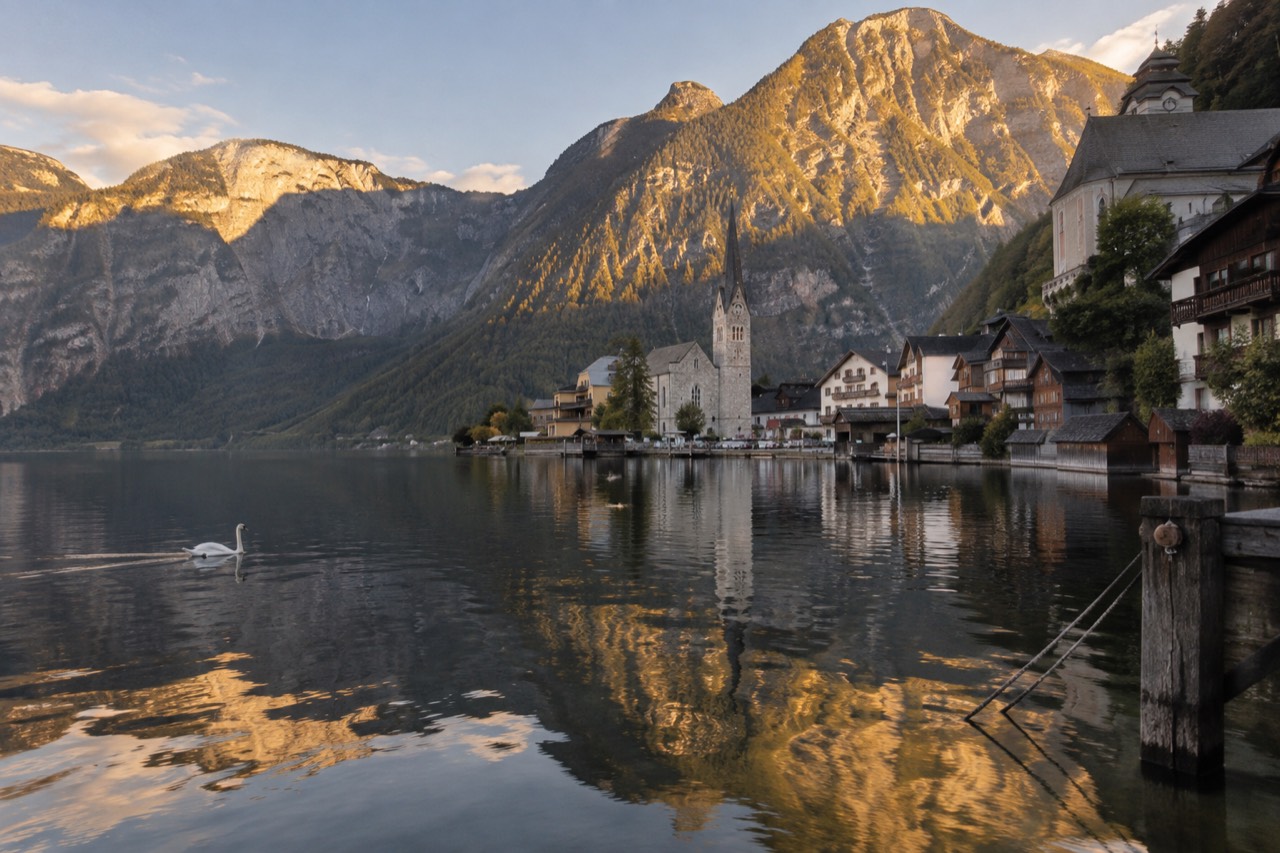
What Are The Top 3 European Countries To Visit?
The top three, counted across the 21 verified multi-country packages listed on this site, are Austria, Germany and Italy. Austria appears on 11 of the 21 itineraries and Germany on 11, tied at the top. Italy appears on 8, level with Switzerland, and edges the third place on the strength of the country's pull for first-time visitors and its depth of review data.
That is a different kind of answer from the usual listicle. Most "top three countries" articles are written from preference, a writer's favourite lunch or a memorable view. Three countries stand out across the 21 escorted, small-group and coach packages of 12 to 16 days on offer, each one verified as currently bookable, each one's country list read off its own itinerary. When you count which countries those itineraries actually cross, a clear pecking order emerges, and it is not the order most people guess.
The counting method matters, so it is worth stating plainly. A country counts when the itinerary names it as a stop or an overnight, not when the coach merely rolls down a motorway with the country's border posts in the wing mirrors. Operators design routes around the places people book trips to see, so the frequency of a country across 21 independently designed itineraries is a reasonable proxy for what travellers, in aggregate, most want from a European trip.
The result also says something about geography. Austria and Germany sit in the middle of the continent, and a coach crossing from Western Europe to the Balkans, or from the Alps to the Baltic, passes through one or both of them almost by necessity. Italy is different: nobody crosses Italy by accident. It appears on eight itineraries because operators deliberately build routes around it, which makes its third place arguably the strongest signal in the whole count.
For a reader planning a two week trip, this site's own collection is a good place to see how these countries combine in practice.
How The Count Was Run Across 21 Packages
Each of the 21 verified packages had its published itinerary read and its country list counted, with a country included only where the listing confirms a stop there. The result is a frequency table, not a survey: Austria and Germany each appear on 11 of the 21 itineraries, Italy and Switzerland on 8 each, France on 7, and the Netherlands on 6. No preference, weighting or editorial judgement went into the numbers.
The roster itself is narrower than "all tours of Europe". Every package on this site is a multi-country trip of 12 to 16 days: 11 of the 21 run exactly 14 days, four run 12 days, two run 13, three run 15 and one runs 16. That narrowness is a strength for this question, because it holds trip length roughly constant. A 12 to 16 day trip forces choices, and what 12 different operators choose to include, over and over, tells you where the demand is.
Two caveats belong here. First, frequency measures supply as much as desire: operators run what sells, so the count reflects what thousands of past customers have voted for with their bookings. Second, the roster skews west and centre. The region split across the 21 packages is Western Europe classics 8, Balkans and the Adriatic 5, Central and Eastern Europe 3, Scandinavia and the Baltics 3, and Britain and Ireland 2. A site built around Balkans specialists alone would produce a different top three, with Serbia, which appears on 5 itineraries, much closer to the front.
Still, the pattern holds across every region on the roster. Even the Balkans and Scandinavia routes touch the central European corridor on their way in and out, and the western classics lean on Austria, Germany, Italy and Switzerland so heavily that a two week trip missing all four would be a strange one indeed. If you are choosing between near-identical four-figure listings, the frequency count is a decent first filter, and the deeper comparisons live in the site's guide on multi-country Europe tour packages.
Austria: The Country Most Itineraries Cross
Austria appears on 11 of the 21 verified packages, tied with Germany as the most-visited country on the roster. It owes the top spot to geography as much as to its own attractions: a coach crossing from western Europe toward the Balkans, Hungary or the Baltic almost has to pass through it, and operators consistently build in stops rather than just transiting.
That is the honest reading of Austria's first place, and it does not diminish the country. Salzburg and Innsbruck are the two names that recur across the itineraries, and both deliver the compact, walkable old town that coach passengers can actually see in a half-day stop. Vienna appears on the central European routes, where the itinerary usually allows at least one full day, and the Danube valley between Vienna and Salzburg is the kind of scenery that fills a long driving day without anyone complaining.
For a first-time visitor, Austria is also an easy country to be a tourist in. The stops are compact, the transport links are dense, and the country's position means that even a modest two week itinerary can pair it with Germany, Italy, Switzerland and Hungary in one trip. That pairing is exactly what the high-frequency countries on this roster do for each other: Austria's 11 appearances are not 11 alpine-only tours, they are 11 different combinations, most of which use Austria as the hinge.
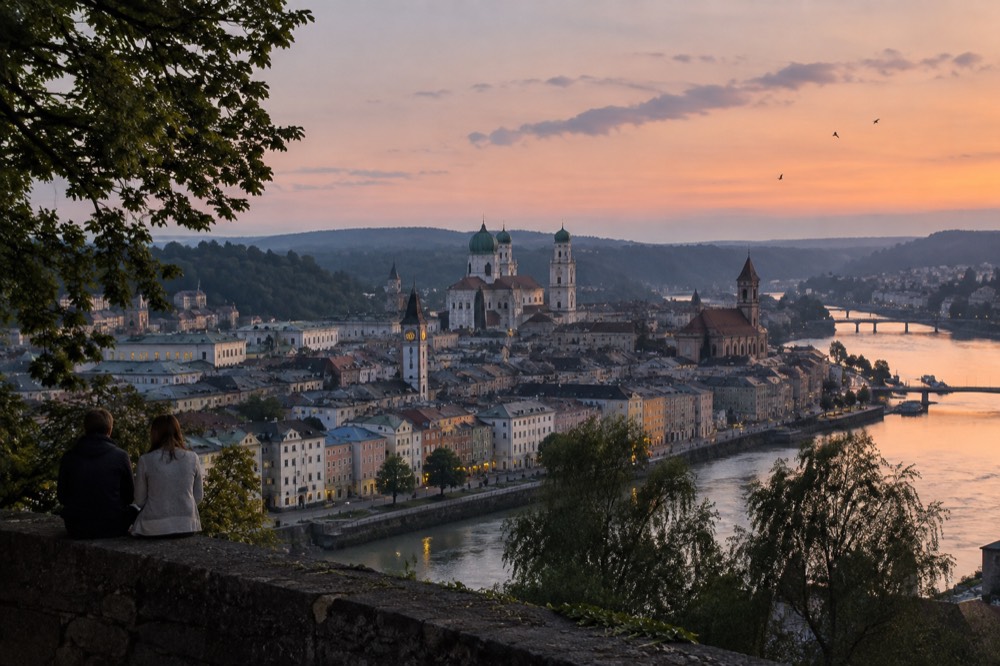
The practical lesson for a buyer is that Austria is nearly impossible to miss if you book a multi-country package, but very easy to under-experience. If Salzburg or Vienna matters to you, check whether the itinerary lists an overnight there or only a photo stop, because the difference between the two is the difference between a real visit and a view from a parking bay. The listings on this site state which stops are confirmed and which are options, and that distinction is worth reading before any deposit is paid.
If Austria is the hinge country on your shortlist, the 14-day Europe Jewel route from Amsterdam runs straight through it and is worth a look before you settle on anything else.
Germany: Eleven Itineraries And A Natural Hub
Germany matches Austria with 11 appearances across the 21 packages, and for a related reason: it is the continent's transport hub. Most western and central European coach routes cross it, and the itineraries concentrate on Bavaria, the Rhine and Berlin, the three corners of the country that package routes can reach without unravelling the schedule.
Bavaria is the workhorse. Munich anchors the central European routes, including the 15-day Central & Eastern Europe Explorer, which starts and finishes there and runs from $2,585 per person, rated 4.9 across 7 reviews. The Bavarian stops pair naturally with Austria's Salzburg, two hours apart by road, which is one reason the two countries top the table together: the alpine corridor between Munich and Salzburg is the most-travelled stretch of road in European coach touring.
The Rhine and the north appear on the itineraries that start or finish in Amsterdam or London, where the route needs to cross Germany anyway and the operators build in a stop. Cologne and the Rhine gorge are the usual choices. Berlin shows up less often than you might expect on two week multi-country routes, because it sits off the east-west corridor that most of these itineraries follow, and a detour to Berlin costs two driving days that operators prefer to spend elsewhere.
For a traveller weighing one package against another, Germany is the country where the "which cities?" question matters most. Eleven itineraries touch Germany, but they touch very different parts of it, and two tours that both "include Germany" can share nothing but the border. Read the stop list, not the country list. The site's guide to how 14 days splits across Europe countries breaks this down day by day for the classic routes.
Italy: Eight Packages And The Deepest Review Pool
Italy appears on 8 of the 21 itineraries, level with Switzerland, and takes third place on the strength of demand rather than geography. No coach crosses Italy by accident, so every one of those 8 appearances is a deliberate design choice by the operator, and the review data backs the choice up: the most-reviewed package on this site is an Italy-heavy route with 878 reviews.
That route is Europe Escape, a 12-day round trip from Rome rated 4.5, and its review pool is an order of magnitude deeper than most of the roster. Only 8 of the 21 packages carry more than 50 reviews, so an itinerary with 878 is an outlier in every sense. It is the clearest evidence on this site that when travellers vote with bookings, Italy collects votes.
The Italian stops across the eight itineraries are the ones you would predict: Rome, Venice and Florence dominate, with the Alpine lakes appearing on the routes that cross from Switzerland. The 14-day Taste of Europe tour, from $2,238.12 per person and rated 4.0 across 17 reviews, is built around exactly this combination, pairing Italy with France, Monaco, Switzerland and Germany in a single loop from Paris.
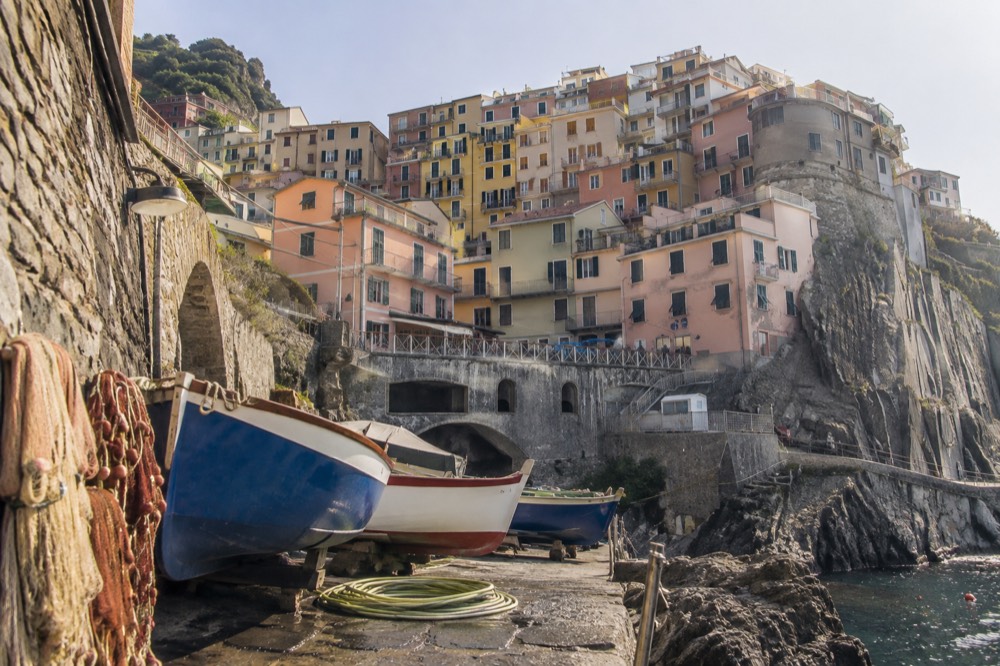
Italy is also where the pacing question bites hardest. Rome and Venice in one itinerary is a long way apart, and the itineraries that include both usually spend a full driving day on the transfer. If your heart is set on Italy specifically, check whether the package gives you overnights in both cities or a long day trip to one of them, because the difference is the single biggest quality gap between otherwise similar listings. The site's guide to group size and daily pacing on Europe coach tours covers how to read a day-by-day itinerary for exactly this.
The Countries Just Behind The Top Three
Switzerland ties Italy on 8 appearances and only misses the podium because Italy's demand signal is stronger, and France follows on 7. The next tier is the Netherlands on 6, then Belgium and Hungary on 5 each, with Serbia also on 5 thanks to the Balkans routes. The full frequency table across all 21 packages reads as follows.
| Country | Appearances across the 21 packages | Tier |
|---|---|---|
| Austria | 11 | Top |
| Germany | 11 | Top |
| Italy | 8 | Top |
| Switzerland | 8 | Second |
| France | 7 | Second |
| Netherlands | 6 | Third |
| Belgium | 5 | Third |
| Hungary | 5 | Third |
| Serbia | 5 | Third |
Switzerland deserves its own word, because it is the most expensive of the frequent countries and the one that pushes package prices up. The premium alpine routes on this site make that explicit: Scenic Scandinavia and its Fjords runs from $5,265 per person, and Country Roads of Bavaria, Switzerland & Austria from $5,085, both at the top of a price span whose median is $3,235. Switzerland's mountains are the draw, and the cost per day across the roster runs from $151 at the cheapest end to $437 at the most expensive, with the alpine-heavy itineraries sitting well above the median.
France's 7 appearances are concentrated in the western classics, where Paris is usually the start, the finish or both. The Netherlands and Belgium cluster on the Amsterdam-anchored routes, and Hungary's 5 come from the central European itineraries that use Budapest as a hinge between west and east. Serbia's 5 are all Balkans routes, and they are a reminder that the "top three" question has a different answer if your interest runs to the Adriatic rather than the Alps.
What A Two Week Route Through The Top Three Costs
A 14-day package crossing the top three countries runs from $2,238.12 per person at the budget end to $3,804 in the classic tier, all land prices with the long-haul flight booked separately. The median across the whole roster is $3,235, and ten of the 21 packages sit between $150 and $230 per day for the land package alone.
Two listings show how differently the same three countries can be packaged. The 14-day Taste of Europe tour runs from $2,238.12 per person, rated 4.0 across 17 reviews, and crosses France, Italy, Monaco, Switzerland, Germany and more in a loop from Paris. Europe Jewel runs from $2,835 per person, rated 4.5 across 405 reviews, and crosses ten countries in 14 days on a round trip from Amsterdam. Both touch the top three; the difference is the tier of the hotels, the depth of the review pool and the breadth of the route.
Neither price includes the flight. Every one of the 21 packages on this site is a land price: the operators' own product pages list flights in the not-included block on 19 of the 21 listings, and the other two list no air either. That is worth fixing in your head before you compare a $2,238.12 package against a $3,804 one, because the airfare sits on top of both. The site's guide to flights to Europe for a 14-day tour covers the booking side.
Europe Jewel is the stronger reference point if the top three are your priority, because its ten-country route runs straight through the Austria-Germany-Italy corridor and adds the Netherlands, Belgium and Switzerland on the way. With 405 reviews behind a 4.5 rating, it has the second deepest review pool on this site, which matters when you are choosing between near-identical listings.
One more cost note that catches buyers out: none of the 21 packages advertises free cancellation. Deposit and cancellation terms belong to each operator's own booking conditions, and they differ from operator to operator, so the terms deserve the same read as the itinerary. The site's guide on Europe tour deposits, cancellation and booking windows lays out what to check before you commit.
Entry Rules For The Top Three Countries
Austria, Germany and Italy are all in the Schengen area, so one set of entry rules covers all three: US, Canadian, Australian and British passport holders need no visa for a stay of up to 90 days in any 180-day period, and a 14-day tour uses a small fraction of that allowance. ETIAS is not in operation yet and no applications are being collected, so there is nothing to apply for today.
The 90-day figure is counted as a rolling window: no more than 90 days of presence inside any 180-day period, counted backwards from each day of stay, as set out in the Schengen Borders Code. A 14-day trip uses 14 of those 90 days. The only travellers who need to do arithmetic are those who have already spent time in Schengen countries in the previous 180 days, because those earlier visits count toward the total.
ETIAS is the change on the horizon, and the honest status is that there is no date. The EU's own ETIAS site states that the system is not in operation and no applications are being collected, and that the start date will be announced several months before launch. The expectation is the last quarter of 2026, and the fee will be EUR 20, with under 18s and over 70s exempt. Until the EU announces a start date, any page telling you to apply now is wrong. The official source is the EU's ETIAS site, and it is the only place to apply once the system goes live.
What is already fully in force is EES, the Entry/Exit System, which has been operational at every external border crossing point since 10 April 2026. On first entry, border officers record your passport details and take a photo and fingerprints instead of stamping; subsequent crossings are quicker because the record already exists. There is no fee and nothing to do in advance. The UK government's guidance notes only that border processing may take longer than usual, so build a little slack into any tight connection. The full country list and rules are on the European Commission's Schengen area page.
One passport point that matters more than most: Schengen law asks that your passport be valid for at least three months after your departure from the area and issued within the previous ten years, and both are grounds for refusal. Some operators ask for more, with six months beyond return the common contractual figure, so six months is the safe planning number. The site's guide to passport validity rules for Europe tours covers the detail.
If Your Top Three Is Not This Top Three
The frequency count reflects a roster that leans west and centre, so a reader drawn to the Balkans, the Baltics or Britain will find a different podium. Serbia appears on 5 itineraries, the Scandinavian routes carry their own country sets, and the Britain and Ireland pair covers neither Austria nor Germany at all. The right top three is the one that matches the trip you actually want, and the roster is wide enough to serve several different answers.
The Balkans cluster is the clearest counter-example. Five packages cover the region, from the 14-day Balkan Experience at $2,517 per person to the 15-day Small Group: Balkan Extended at $4,957, and their country lists barely overlap with the western classics. The semi-private Athens to Sarajevo route, rated 5.0 across 22 reviews and capped at 10 travellers, covers a set of countries that no alpine itinerary touches. If your top three is Montenegro, Albania and Bosnia and Herzegovina, the count above is not your list, and the site's guide to Eastern Europe tour packages is where to start.
Scandinavia works the same way. Best of Scandinavia runs 12 days from $2,325 per person, rated 4.9 across 118 reviews, and its country list shares nothing with the top three beyond the continent. The frequency table is a map of where the crowd goes, and the crowd is not wrong, but it is not the only customer. The useful question is not "which three countries are best" but "which three countries make the trip I want", and the answer depends on whether that trip is alpine, Adriatic, Baltic or something in between.
Whatever the answer, this site exists to help you compare the near-identical four-figure listings that deliver it, and the full comparison toolkit starts at 14 Days Europe Tour Packages.
Common Questions About The Top Three European Countries To Visit
What Are The Top 3 European Countries To Visit?
Counted across the 21 verified multi-country packages on this site, the top three are Austria, Germany and Italy. Austria and Germany each appear on 11 of the 21 itineraries, and Italy on 8, level with Switzerland. The count reflects where escorted routes actually go, which is a good proxy for where travellers most want to go.
Why Do Austria And Germany Appear On So Many Tours?
Geography. Both sit in the middle of the continent, and a coach route crossing from western Europe toward the Balkans, Hungary or the Baltic passes through one or both of them. Operators build stops into those crossings rather than just transiting, with Salzburg, Munich and Vienna the names that recur most often.
Is Switzerland Or Italy The Better Third Country?
They tie on the count at 8 appearances each. Italy has the stronger demand signal: the most-reviewed package on this site is an Italy-heavy route with 878 reviews, and no coach crosses Italy by accident. Switzerland is the more expensive of the two and pushes package prices up, with the alpine-focused itineraries sitting well above the roster median of $3,235 per person.
Do I Need A Visa Or ETIAS For Austria, Germany And Italy?
No visa, and no ETIAS yet. All three are Schengen countries, and US, Canadian, Australian and British passport holders need no visa for up to 90 days in any 180-day period. ETIAS is not in operation and no applications are being collected; the EU expects it in the last quarter of 2026 and will announce the start date in advance.
Which Package Covers The Top Three Countries Cheapest?
The 14-day Taste of Europe tour, from $2,238.12 per person, crosses France, Italy, Monaco, Switzerland and Germany in a loop from Paris. That is a land price, like every price on this site: the long-haul flight is booked separately. Europe Jewel, from $2,835, covers ten countries including Austria and Germany with a much deeper review pool behind it.
Does The Top Three Change If I Prefer The Balkans Or Scandinavia?
Yes, completely. The frequency count leans west and centre because that is where most of the 21 packages run. Serbia appears on 5 itineraries via the Balkans routes, and the Scandinavian packages share no countries with the top three. The right top three is the one matching the trip you want, not the one the crowd booked.