What To Pack For A Europe Trip: Two Weeks In One Case
A two week coach tour is one of the few trips where packing is a genuine constraint of the product you bought, not just a preference. Most escorted operators take one main case per traveller, the coach holds everyone's luggage at once, and you move hotels every second night. Here is what that means for the bag you choose and what goes in it.
Short answer
Pack for a two week Europe tour in one soft-sided case plus a day pack, built around layers rather than outfits. Across the 21 packages on this site, 19 of 21 include all accommodation and some meals, so you need fewer extras than an independent trip. Bring a passport valid six months beyond return, because two major operators demand more than Schengen law does.
What To Pack For A Europe Trip: Two Weeks In One Case
Most packing advice treats a Europe trip as a blank canvas. A two week escorted tour is not a blank canvas. You are sharing a coach with a full load of other travellers' luggage, changing hotels roughly every second night, and handing your main case to someone else to load and unload most mornings. Across the 21 packages listed on 14 Days Europe Tour Packages, the pattern is remarkably consistent: a joined group, a coach or minibus between countries, accommodation included every night, and some meals but never all of them. Packing for that product is a different exercise from packing for a city break or a rail trip, and this guide works through it constraint by constraint.
The single biggest mistake is treating the case as a wardrobe. Treat it as a system. Everything below is built around what the tours on this site actually include, what the operators' own booking conditions demand you carry, and what the border rules require, so that nothing in your bag is there on a guess.
Why A Two Week Coach Tour Makes Packing Different
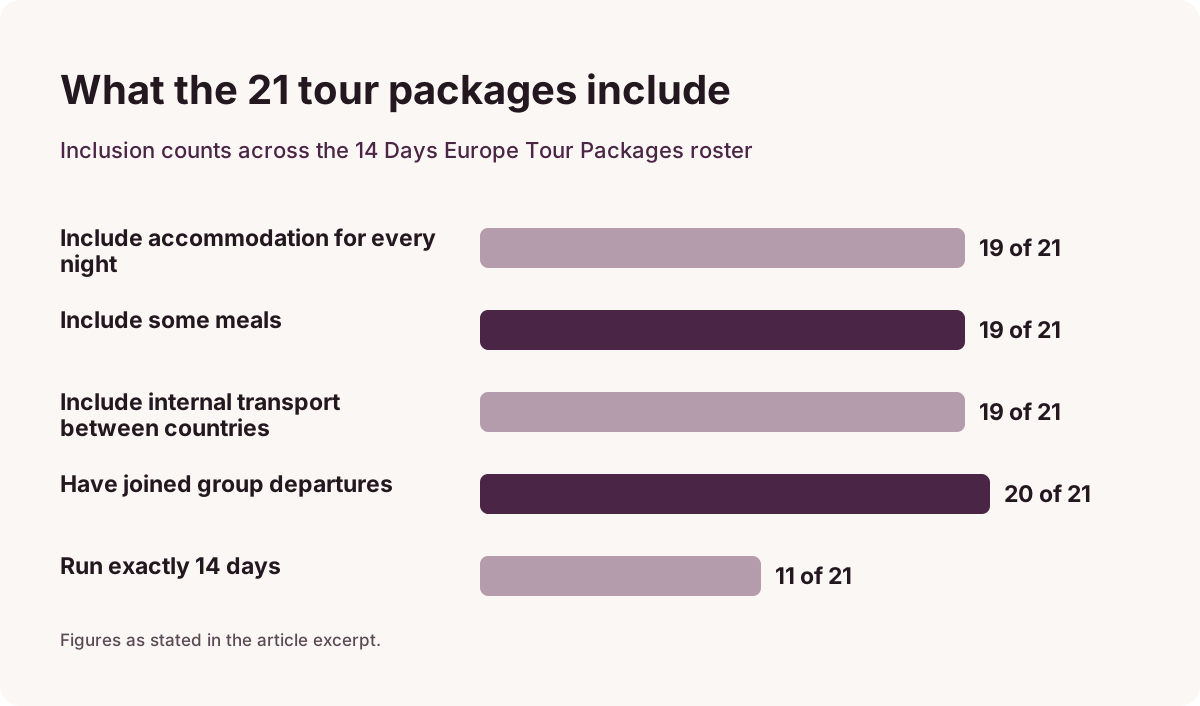
A coach tour compresses your luggage decisions into one rule that matters more than any packing list: whatever you bring, you lift it, store it, and wait for it around 40 times in two weeks. The 21 packages on this site run 12 to 16 days, move between 2 and 10 countries, and 19 of the 21 include internal transport between those countries in the headline price. Your case lives on that transport, not in a hotel basement.
The practical difference shows up in the shape of the bag, not just its size. Hard-shell cases with four spinner wheels survive airport carousels well, but on a coach the underfloor hold is a shared, irregular space, and a soft-sided case with some give packs into gaps a rigid shell cannot. A duffel-style bag or a soft roller also survives being slid along a floor better than glossy plastic corners.
The second difference is hotel churn. On a 14 day itinerary you rarely stay anywhere long. Every unpack-and-repack cycle is a chance to lose a charger behind a nightstand, so the standard advice inverts: instead of unpacking into drawers, most coach travellers live out of the case, which argues for packing cubes, a clear toiletry bag, and a system where each cube is a category rather than a day. The third difference is that your day pack becomes your real bag. It carries the passport, the water bottle, the layer for the coach's air conditioning, and whatever you buy at a lunch stop, and it goes on the coach floor or your lap, not the hold.
None of this is guesswork about the products on this site. The roster maths are clear: 11 of the 21 tours run exactly 14 days, and the longest runs 16, so you are packing for a fortnight's worth of wear in a case you will handle almost daily.
The One Case Rule And What It Means For Your Wardrobe
Escorted coach operators across this roster take one main suitcase per traveller, and the coach's luggage capacity is sized to that rule, not to your preference. The listings show joined group departures on 20 of the 21 products, which means the hold fills with everyone else's case too. One moderately sized soft case plus a small day pack is the target, and everything in your wardrobe plan has to earn its place inside it.
The wardrobe consequence is the capsule principle, applied honestly. For two weeks you plan around repeatable layers, not outfits: a base layer of shirts that mix, two to three bottoms, two pairs of shoes maximum (one you wear on travel days, one that packs flat), and outerwear that does the heavy lifting. A light insulated layer under a packable rain shell covers more weather than a single heavy coat, and both compress. Dark colours and quick-dry fabrics hide the laundry gap, which we cover below.
Shoes deserve their own sentence because they are the heaviest, least compressible thing you own. Wear the bulkiest pair on the coach and in airports, and pack the second pair only if it genuinely serves a purpose the first does not. The same logic applies to toiletries: travel sizes, because 19 of the 21 packages include hotels where shampoo and soap are standard, and because anything over 100 ml goes in the hold case anyway.
If you want a concrete itinerary to picture, the Classic Europe tour is a good template: 14 days, London round trip, rated 4.6 across 309 reviews, from $3,185 per person. It is a joined-group coach product in the classic mould, so the one-case discipline applies exactly as described. You can read the full day-by-day detail on the Classic Europe tour page, including what the operator confirms about meals and transport, or Check availability if you already know your dates.
The three tours above span the luggage spectrum nicely: a large-group classic, a mid-size premium loop, and a semi-private car tour. Which one suits you changes what you pack less than you would think, but it changes how often you lift it.
What The Tour Price Already Covers So You Pack Less
Across the 21 packages on this site, 19 of 21 include accommodation for every night, 19 of 21 include some meals, and 19 of 21 include internal transport between countries in the headline price. International flights are included on none of them. That means the case you pack is for the land portion of the trip only, and a surprising amount of what independent travellers carry is already paid for and waiting.
The inclusion pattern is the packing story. Because every hotel night is covered on 19 of the 21 products, you are not carrying camping gear, sleep sheets, or a towel in any realistic scenario. Because some meals are included, you carry snacks for coach days, not a kitchen. Because transport between countries is in the price, you are not managing luggage across rail platforms and ticket machines, which is exactly why a slightly fuller, heavier case is more tolerable here than on an independent rail trip.
What you do need to budget bag space for are the gaps. Optional excursions and free-afternoon entries are the classic ones, and they are covered in detail in optional excursions and hidden costs on Europe tours. In packing terms the gaps translate to: a day pack that can hold a water bottle and a light layer, modest-capable cover-ups for cathedral entries, comfortable walking shoes for the long free-walking days, and a small pouch for the currencies and cards you will actually use.
The Classic Europe product above is a fair example of the pattern: some meals included, never all, accommodation throughout, and a land price that stops at the border of your flight. For a fuller breakdown of what sits inside a headline price generally, see what is included in a Europe tour package.
One point worth pausing on, because it surprises first-timers: no operator on this roster advertises free cancellation on any of the 21 products. Deposit and cancellation terms belong to each operator's own booking conditions. That matters for packing in one specific way, which is travel insurance and documentation, and it is worth sorting before the case is even packed rather than at the departure gate.
Packing For Borders: Passports, ETIAS And EES
Pack your passport where you can reach it without opening the main case, and check its dates before anything else goes in the bag. Schengen law requires validity for at least three months beyond your intended departure from the area and issue within the previous ten years, but two major operators on this roster, Intrepid and Contiki, contractually require six months beyond your return date. Six months is the number that satisfies everyone.
The legal baseline comes straight from the Schengen Borders Code, which sets out both passport conditions as grounds for refusal at the border: validity extending three months past departure and issue within the last ten years. The ten-year half of that rule catches British passports renewed before October 2018, a trap the FCDO spells out explicitly. Intrepid's own booking conditions go further and demand six months beyond the last date of travel, and Contiki's require a machine-readable passport valid six months past the trip return date. More detail is in passport validity rules for Europe tours if your passport is anywhere near a boundary.
Two border systems matter for the journey itself. EES, the Entry/Exit System, is fully operational at every external border crossing point since 10 April 2026: your fingerprints and facial image are recorded digitally, and manual passport stamping for short stays has ended. There is no cost and nothing to apply for, but it can add time at the border, and on a Balkans loop that crosses in and out of Croatia, registration can happen more than once in a single trip.
ETIAS is the one that trips people up, because it does not exist yet. The EU states plainly that ETIAS is not in operation and no applications are being collected, and that it is expected in the last quarter of 2026, with the specific date to be announced later by the European Commission. When it does start it will cost EUR 20, be valid for up to three years or until the linked passport expires, and apply to nationals of 59 visa-exempt countries travelling to 30 European countries. Do not pay anyone for an ETIAS today, and trust only the official EU site when the time comes.
| Border item | Status | What you actually pack or do |
|---|---|---|
| Passport | Required, always | Six months validity beyond return covers both law and operator contracts |
| EES registration | Live, automatic | Nothing to apply for; expect extra minutes at first external border |
| ETIAS | Not yet operating, expected last quarter of 2026 | Nothing yet; apply only via the official EU site when it launches |
| UK ETA (if London is on the itinerary) | Live, GBP 20 | Needed by every traveller including children; British and Irish passport holders exempt |
| Travel insurance | Not a Schengen legal entry condition | Mandatory under Intrepid and G Adventures contracts, a booking condition for Expat Explore, recommended only by Contiki |
The insurance row is the one most worth reading twice, because the confusion is everywhere online. Insurance is a legal requirement of a Schengen visa application, and US, Canadian, Australian and British passport holders do not make visa applications for a short stay. But an operator's contract is a different matter entirely, and Intrepid's clause 16, for example, requires cover with a recommended minimum of US$200,000 per category and your policy number on day one or you cannot join. The full comparison is in travel insurance for escorted Europe tours.
If your itinerary touches London, remember the UK ETA is a separate system: it costs GBP 20, is needed by each traveller including babies, and even applies when transiting UK border control. The details are on the official UK government ETA page.
Laundry, Layers And The Capsule Wardrobe That Survives 14 Days
You do not pack 14 days of clothes for a 14 day tour. You pack roughly five to seven days of mix-and-match layers and a laundry plan, because every hotel on the 19 packages that include accommodation offers either a laundry service or a sink. The capsule that works is three bottoms, five tops, two layers of warmth, one rain shell, and the shoes on your feet.
The arithmetic is simple once you accept repeats. Five tops worn in rotation, none of them memorable enough to be photographed twice, cover two weeks with one or two hotel laundry stops. Dark, quick-drying fabrics make a sink wash an overnight job. Two bottoms in different weights cover restaurant evenings and walking days, and a third only earns its place if the itinerary genuinely spans two climates.

Layers beat bulk for one reason the itinerary structure makes obvious: the same day can include a chilly morning coach, a warm afternoon walk, and an air-conditioned dinner. A merino or light fleece base under a packable shell is adjustable three times a day and takes less room than one insulated jacket. Merino also has the practical advantage of surviving repeat wears between washes better than cotton.
The premium end of the roster illustrates why this matters even on expensive tours. The European Whirl, for instance, runs 14 days ending in Paris, rates 4.7 across 58 reviews, and starts from $3,804 per person. A higher price buys better hotels and pacing, not a bigger luggage allowance, so the same one-case discipline applies, and the same layering system is what keeps you comfortable through alpine mornings and Mediterranean afternoons on a single loop.
Packing cubes are the one accessory that consistently earns its space on a coach tour. One cube per clothing category means a 60-second repack in a hotel where you arrived late and leave early, and it means the case can be searched at security or in a hotel room without turning into a floor explosion. A slim cube for chargers and adapters, a small one for documents, and the case becomes navigable in the dark.
Money, Documents And The Paperwork That Earns Its Pouch
Pack one small document pouch that lives in the day pack, never the main case: passport, insurance policy number and the insurer's 24-hour emergency line, booking confirmation, and a card with your tour's first-hotel address. Intrepid's contract requires the policy number and emergency contact on day one, and Expat Explore requires proof of insurance before you embark at all, so these are not optional papers.
The document pouch is also where your copies live. A phone photo of the passport's data page, plus a paper photocopy stored separately from the original, covers the low-probability disaster cheaply. If your itinerary spans countries outside the euro, a small amount of local currency for the first day in, say, Switzerland or the Balkans saves an airport queue, though cards work almost everywhere on these routes.
Chargers and adapters deserve a moment of planning rather than a last-minute grab. A single multi-port USB charger plus a two-outlet Europe adapter serves a phone, earbuds and a camera, and a short extension turns one awkward behind-the-bed socket into enough for a shared room. Coach days are long, so a power bank that actually holds a full phone charge lives in the day pack, not the case.
| Document or item | Why it earns its place | Where it lives |
|---|---|---|
| Passport | Legal entry, operator contract, hotel check-in | Day pack, in the document pouch |
| Insurance policy number and 24-hour emergency line | Required on day one by Intrepid; proof needed before departure with Expat Explore | Document pouch, plus a phone photo |
| Booking confirmation and first-hotel address | First-day logistics and any border question about purpose of stay | Document pouch |
| Passport photocopy, stored separately | Replacement process if the original is lost | Main case |
| Power bank and Europe adapter | Long coach days, shared hotel sockets | Day pack side pocket |
One note on the border-question row: a border guard in France or Italy may ask a visa-free arrival to show proof of accommodation, a return or onward ticket, or even travel insurance, according to UK government travel advice. The tour confirmation in your pouch answers the accommodation question in one document, which is a quiet advantage of an escorted package over an independent trip.
What Not To Pack For An Escorted Europe Tour
Leave behind anything that duplicates what 19 of the 21 packages already provide, anything that only serves one evening, and anything you would grieve losing. That means no towels or hair dryers, no more than two books when a phone holds both, no single-use outfits, and no valuables beyond a camera and a phone. The case you carry every second day should contain nothing irreplaceable and nothing unused.
The duplication rule does most of the work. Hotels on these itineraries supply towels, hair dryers in nearly all cases, and breakfast on the mornings your package covers. The single-use rule kills the rest: the outfit that works at exactly one dinner, the shoes for one walk, the jacket for one photo. If an item serves fewer than three distinct moments on a 14 day itinerary, it does not fly.
The leave-space rule is the one people forget. Two weeks of touring generates souvenirs, and the case that leaves home full returns impossible to close. A foldable duffel inside the main case is the classic fix for the return leg, and leaving 15 to 20 percent of the case empty at the start costs you nothing but saves a repack on a hotel floor in Rome.
There is one roster exception worth knowing about, and it is the only product where the luggage logic genuinely softens. The Athens to Sarajevo and Belgrade semi-private tour runs with a dedicated tour leader and car, a maximum of 10 travellers, and rates 5.0 across 22 reviews, from $3,784 per person. A car boot is more forgiving than a shared coach hold, and with nine other travellers rather than a full coach, the physical constraint on case size eases. The packing system above still applies, but the one-case rule is a comfort rather than a hard product constraint here.
Seasonal Packing Read From The Departure Calendar
Across the 21 packages on this site, September is the busiest departure month with 14 products offering it, followed by May and June, then October with 10. February appears on none of the 21 departure calendars at all. Pack for your departure month's reality, not a generic Europe packing list, and the biggest seasonal variable between these months is the outerwear layer, not the whole wardrobe.
The calendar is the honest source here, because this site verifies no per-city temperature or rainfall figures and will not invent them. What the departure calendars do show is where the demand sits: a spring or autumn departure dominates, with May at 14 products, June at 12, September at 14 and October at 10, while January offers just one departure and February none. Winter departures exist, including a Christmas and New Year version of the Classic Europe itinerary rated 5.0 across 17 reviews, from $3,655 per person, but they are a minority of the roster.
Practically, the layering system from the wardrobe section flexes by season without changing size. A shoulder-season departure keeps the insulated layer and the rain shell, because alpine and Balkan itineraries in May or October can serve you four seasons in a week. A midsummer departure trades the insulation for a sun hat, a light long-sleeve for cathedral and mosque entries, and the same rain shell, because rain does not respect a calendar. A winter departure inverts the ratio: one real coat worn on travel days, warm base layers packed, and the same everything else.
| Departure month | Products on this roster offering it | The packing adjustment |
|---|---|---|
| January | 1 | Full winter kit, coat worn on travel days |
| February | 0 | No departures exist on any of the 21 calendars |
| March | 6 | Warm layers plus rain shell |
| April | 13 | Warm layers, waterproof footwear |
| May | 14 | Midweight layers, rain shell |
| June | 12 | Light layers, sun protection, rain shell |
| July | 6 | Lightest wardrobe of the year |
| August | 3 | Light layers, more laundry stops |
| September | 14 | Midweight layers return |
| October | 10 | Warm layers, waterproof footwear |
| November | 2 | Winter kit, coat worn on travel days |
| December | 3 | Full winter kit, festive departures available |
The chart above is the packing decision in one picture. If your dates are flexible and you want the wardrobe that is easiest to compress, the shoulder months are where the roster concentrates, and the midweight layering kit those months demand is the smallest, most flexible version of this packing system.
The Final Check Before You Zip The Case
Run three checks the night before: passport dates against the six-month rule, insurance documents against your operator's actual contract position, and the case against the one-case-plus-day-pack discipline. Then remove one outfit's worth of clothing, because every two week pack starts overfull. If all three pass, the case is ready for a coach hold, a border queue and a fortnight of hotel churn.
The night-before routine is short on purpose. First, the passport: six months beyond your return date satisfies the strictest operator contract on the roster, not just the law, and the ten-year issue rule catches older British passports in particular. Second, the insurance paperwork: whether it is mandatory, a booking condition, or merely recommended depends entirely on which operator you booked, and the difference is spelled out in each company's own terms.
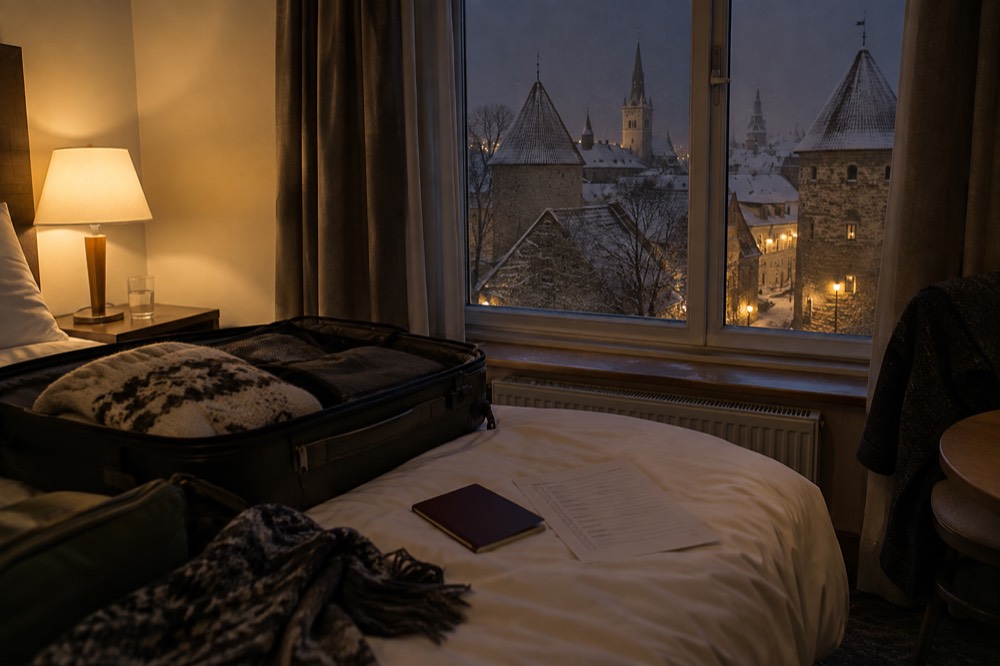
Third, the physical case. Weigh the honest question of whether you can carry it up a flight of stairs yourself, because on arrival days the coach cannot always park at the hotel door. If the answer is no, take things out until it is. The tour you are packing for handles the countries, the hotels and the transport; the case is the one part of the trip you carry personally, twice a day, for two weeks.
If you are still choosing the tour rather than the case, the three below span the full range of what this site sells, from a large-group classic at $3,185 to a semi-private car tour at $3,784, and the packing system in this guide works for every one of them.
Common Questions About Packing For A Two Week Europe Tour
How Big Should My Suitcase Be For A Two Week Europe Coach Tour?
One moderately sized soft-sided case plus a small day pack is the target. The coach hold is shared with every other traveller's case on a joined-group departure, and 20 of the 21 packages on this site are joined groups. A soft case packs into irregular hold space better than a rigid one, and you should be able to carry it up a flight of stairs yourself.
Do I Need To Pack A Towel Or A Hair Dryer?
No. The hotels included on the 19 packages that cover every night supply the standard room basics, and you will be in a proper hotel every night of the trip. Packing space is better spent on layers, comfortable shoes and a document pouch.
How Many Outfits Do I Pack For 14 Days?
Roughly five to seven days of mix-and-match clothing, not 14 outfits. Plan one or two hotel laundry stops or a sink wash, choose dark quick-dry fabrics, and let a layering system rather than single-use outfits carry you through. Anything that serves fewer than three distinct moments on the itinerary does not go in the case.
Does My Passport Need Six Months Validity For A Europe Tour?
Schengen law requires validity of at least three months beyond your departure from the area and issue within the previous ten years. However, Intrepid requires six months beyond the last date of travel and Contiki requires six months beyond the trip return date, so six months is the number that satisfies both the law and the operator contracts.
Do I Need Travel Insurance Documents In My Hand Luggage?
Yes, if your operator requires them. Intrepid asks for your policy number and the insurer's 24-hour emergency contact on day one or you cannot join, G Adventures requests proof on day one, and Expat Explore requires proof before you embark. Contiki only recommends insurance, but border officials in France or Italy may still ask any traveller to show it.
Should I Pack For The Weather Or The Season?
Pack for your departure month as the calendars show it. September is the most available month across the roster at 14 products, and February offers none. This site publishes no temperature or rainfall figures, so the honest seasonal guide is the layering system: keep the insulated layer and rain shell for spring and autumn, go lightest in July and August, and wear your coat on travel days in winter.