Why Is Contiki So Cheap?
An honest look at what makes budget coach touring in Europe cheap, what Contiki's own published terms confirm, and how the cheapest 14-day packages on this site compare.

Why Is Contiki So Cheap?
Contiki is cheap because it sells one product to one age band at very high volume: a land-only coach seat, shared-group transport, hotels chosen for price and location on the bus route, and some meals rather than all of them. Its own booking conditions confirm the model is contractual, not marketing. The 18 to 35 age band, the land-only price and the joined-group format are what keep the headline number low.
The honest starting point is that "cheap" needs defining before it needs explaining. Across the 21 verified multi-country packages on this site, land prices run from $2,110 to $5,265 per person, with a median of $3,235. Cost per day runs from $151 at the cheapest end to $437 at the most expensive, and ten of the 21 sit between $150 and $230 a day. That spread is not random. It maps almost perfectly onto what each package buys: how many countries, what tier of hotel, how many meals, and whether the group is a full coach or a small party.
Contiki's name comes up constantly in this conversation because the brand is famous for low headline prices. What this site can verify about Contiki comes from the operator's own published booking conditions rather than from advertising. Those conditions state that all of Contiki's worldwide trips are designed for a particular age group, with a core 18 to 35 range, and that whichever age band applies, the traveller must sit within it at the start of the trip. That is a contractual clause, not a slogan, and it is the single biggest structural reason the price can sit where it does.
An operator that only sells to 18 to 35s is selling to a market with distinct characteristics. Travellers in that band are more likely to accept twin-share arrangements, to prioritise destination count over room size, and to book the volume departures that let a coach run full in both directions. A full coach is the cheapest possible way to move 40-odd people across a continent, and every empty seat on a departure is a cost someone else has to cover. Volume and age-banding together do most of the work.
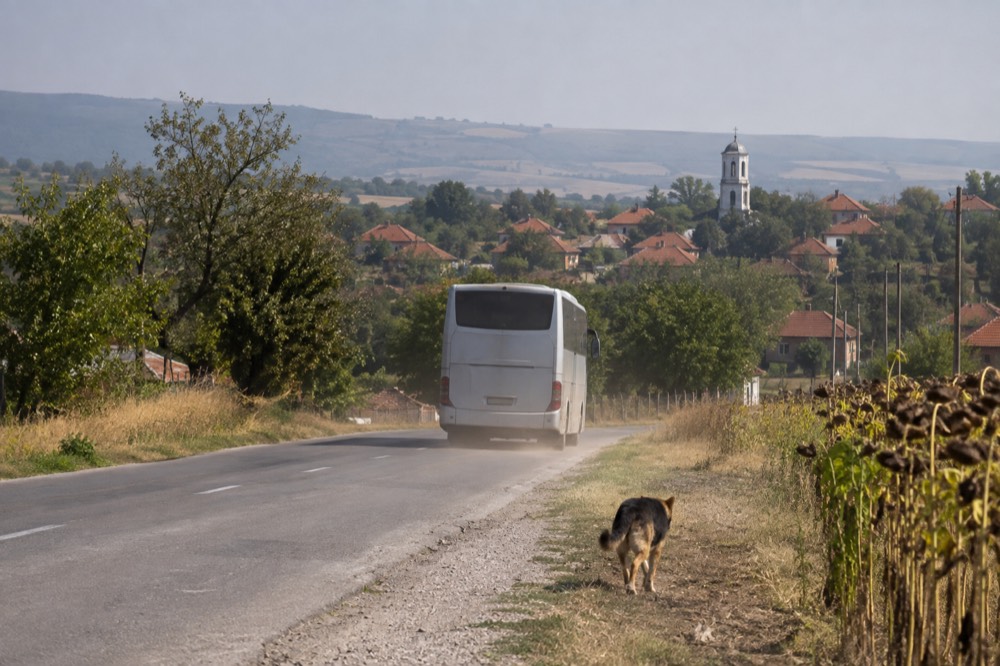
The same logic explains the budget end of the roster on this site, which is worth looking at directly because those prices are verified and Contiki's advertising prices are not part of this site's research. The cheapest listings here follow the identical recipe: land-only pricing, joined groups, some meals, and long coach days that move the group across borders while the travellers sleep or ride.
What Can Actually Be Verified About Contiki's Price Model?
Three things are verifiable from Contiki's own published terms: the 18 to 35 age band is contractual, travel insurance is recommended rather than required, and the passport rule is six months beyond return. Beyond those, this site's research holds no Contiki price, hotel tier or group-size figure, so any confident claim about those would be invented. The verifiable parts still explain a lot.
The age band deserves a second look because most people assume it is a marketing vibe. It is not. The booking conditions, dated August 2026 across all four regional versions this site's research checked, say that Contiki offers a core 18 to 35 range plus a small number of age-banded programmes outside it, including trips exclusive to 18 to 22, 27 to 35 and 35 to 45. Whichever band applies to the specific trip booked, the traveller must sit within that range at the commencement of the trip. An operator that can predict its customers' life stage that precisely can also predict their spending pattern, and it builds the product, and the price, around that prediction.
The insurance position is the other revealing clause. Contiki's conditions describe travel insurance as "highly recommended", not required, and state plainly that the provider cannot be held responsible for a guest's failure to obtain it. Compare the operators whose contracts this site has verified in full: Intrepid makes insurance mandatory with a recommended minimum of US$200,000 per category of cover and proof on day one, Expat Explore makes it a condition of booking, and G Adventures requires it on all tours with a USD 200,000 evacuation and repatriation minimum. Contiki alone leaves the choice, and the risk, with the traveller. That is a cheaper way to run a tour, and it is also a real difference in what the price buys.
The passport clause tells the same story from another angle. Schengen law asks for a passport valid three months beyond departure from the area. Contiki's conditions ask for six months beyond the trip return date, and Intrepid's ask the same. Operators that run big coaches across many borders build in margin for delay, reroute and disruption, because a traveller turned away at one border is a problem for fifty other people's holiday. Six months beyond return is the safe number for any escorted Europe trip, whatever the law's minimum says.
What this site cannot verify about Contiki matters just as much, and honesty here is the whole point. No Contiki price, hotel category, coach capacity or average group size appears anywhere in this site's verified research. No single-supplement figure exists for any operator on the roster. So the answer to "why is Contiki so cheap" rests on the model's verifiable pillars, the age band, the land-only price, the joined group, and on the general economics of budget coach touring, which the rest of this article lays out using figures that are verified.
What Does A Cheap Europe Tour Price Actually Cover?
Every price on this site is a land price. The long-haul flight is never included, on any of the 21 packages, and no flight price is verified anywhere in this site's research. A cheap land package covers accommodation for every night on 19 of 21 listings, some meals, never all meals, and internal transport between countries on 19 of 21. The headline number is real, but it is only ever the on-the-ground half of the trip.
This is the trap that catches people comparing a $2,200 tour against a $2,900 one. The comparison is valid only if both numbers exclude the same things, and on this roster they do: 19 of the 21 products put flights in their not-included block, in the operators' own words, and the two remaining products list no air either. So the flight is always a separate cost the traveller books personally, and no verified airfare figure exists on this site to quote. A cheap package is cheap relative to other land packages, not relative to the total cost of getting to Europe.
Once that is clear, the mechanics of the land price are straightforward. Accommodation is the biggest line, and budget operators manage it by choosing properties on the bus route rather than in the historic centre, and by filling rooms with twin and triple shares. Meals are the second lever: 19 of the 21 packages include some meals, and none includes all of them, which means breakfast plus occasional group dinners at the budget end, with lunch and most dinners bought separately. Transport is the third: a coach that crosses a border while the group sleeps is cheaper per person per kilometre than almost any alternative, and 19 of 21 packages include that internal transport in the headline price.
| What the headline price covers | How many of the 21 packages | What it means for the budget end |
|---|---|---|
| Accommodation every night | 19 of 21 | Budget tier, often outside city centres |
| Some meals, never all | 19 of 21 | Expect to budget for daily food beyond included meals |
| Internal transport between countries | 19 of 21 | Coach travel, usually overnight or long-haul days |
| International flights | 0 of 21 | Always booked and paid separately by the traveller |
| Free cancellation | 0 of 21 | Deposit and cancellation terms sit with each operator |
The cancellation row is the one people overlook. Zero of the 21 packages on this site advertise free cancellation. Deposit and cancellation terms belong to each operator's own booking conditions, and they vary. A cheap price with strict terms is a different product from a mid price with looser ones, and a buyer comparing only the headline number is comparing half the deal.
How Do The Budget End Of These Rosters Compare?
The five cheapest verified multi-country packages on this site run from $2,110 to $2,517 per person, all land-only, all joined groups. The Madrid-departure 14-day coach trip is the cheapest at $2,110.29 and carries no rating yet because it is new. The others carry ratings from 4.0 to 4.5 with review counts between 17 and 878, and the review count matters as much as the score.
A rating without its review count is close to meaningless, and this site prints both together for exactly that reason. The Europe Escape package carries 4.5 across 878 reviews, which is a deep pool and a stable number. The 14-day Taste of Europe carries 4.0 across 17 reviews, which is a real score from a small pool. The Madrid-departure trip carries no rating at all, which is stated honestly rather than dressed up. Only 8 of the 21 packages on this site carry more than 50 reviews, so a buyer at the budget end should read the score and the count, never the score alone. The wider set of guides lives on 14 Days Europe Tour Packages.
| Package | Days | From, per person | Rating and reviews |
|---|---|---|---|
| Madrid, Paris, Venice, Rome coach trip | 14 | $2,110.29 | No rating yet, new listing |
| 14-day Taste of Europe | 14 | $2,238.12 | 4.0 across 17 reviews |
| The Best of Eastern Europe | 14 | $2,249 | 4.4 across 58 reviews |
| Best of Scandinavia (Summer) | 12 | $2,325 | 4.9 across 118 reviews |
| Balkan Experience, seven countries | 14 | $2,517 | 4.5 across 41 reviews |
The pattern in that table is the answer to the price question in miniature. The cheapest listing is a coach trip built around one long loop from Madrid through Paris, Venice and Rome, with the group riding between them. The Best of Eastern Europe covers a region where ground costs sit lower than in the classic western cities. The Balkan Experience reaches Serbia, Bulgaria, North Macedonia, Albania, Montenegro, Croatia and Bosnia and Herzegovina, again a lower-cost region, for $1,288 less per person than the premium Alpine Country Roads package on the same site. Where a tour goes, and how it moves between those places, sets the price far more than the brand on the side of the coach.

Per-day cost makes the comparison fairer, since the packages differ in length. The Madrid trip works out around $151 a day, the Taste of Europe around $160, and the Best of Scandinavia around $194. The premium end of the roster runs to $437 a day. Ten of the 21 packages sit between $150 and $230 a day, which tells you where the market's centre of gravity is: most buyers are paying roughly $200 a day for bed, breakfast and a bus, and everything above that buys smaller groups, better hotels or rarer destinations.
What Do You Give Up At The Cheaper End?
The main trade-offs are pace, position and meals. Budget itineraries spend long stretches on the coach, sleep in properties chosen for the route rather than the view, and leave most food to the traveller's own wallet. Group size is another unknown: no maximum group size is verified for any product on this roster, so the honest answer is that group size is on the operator's listing, never a number this site can print.
Pace is the first thing a budget price spends. A 14-day loop through four or more countries means some days exist mainly to cover distance, with the sightseeing compressed into arrival evenings and the following mornings. This site's guide to group size and daily pacing on Europe coach tours breaks down how the day count splits across countries, and the short version is that more countries per day means less of each country. A traveller who wants two full days in Paris and three in Rome should count the nights on the itinerary before the price.
Position is the second. Hotels at the budget end sit where the coach can reach them, which is often the ring road rather than the old town. That is not a defect, it is the mechanism. The money saved on land in the centre is the money not charged in the headline price. Buyers who care about walking out of the hotel into the sights should read the itinerary's hotel descriptions on the live listing, because this site verifies where a tour goes, not the star rating of where it sleeps.
Meals are the third. Some meals included, never all, means the daily food budget is a real extra. The trade-offs are laid out in detail in what is included in a typical bus tour package, and the planning point is simple: a $160-a-day land price plus three bought meals a day is a different total than the headline suggests, and only the traveller can price their own appetite.
The single supplement is the fourth trade-off, and the least advertised. No single-supplement figure exists for any product on this roster, so no honest number can be printed here, but the concept is real and it lands hardest at the budget end, where the pricing assumes two people per room. Solo travellers should read single supplements and solo pricing on Europe tours and ask the operator for the figure before comparing prices, because it can move a budget package into mid-range territory on its own.
Is The Cheapest Package The Right One To Book?
Sometimes. The cheapest package is right when the traveller wants maximum countries for minimum land cost, accepts coach pace and route-side hotels, and reads the booking conditions before paying a deposit. It is wrong when the trip is a once-in-a-lifetime occasion, when the traveller wants small groups or central hotels, or when strict cancellation terms would turn a changed plan into a lost deposit. The price is only one of the terms being bought.
The decision framework this site recommends is the same at every price point. First, check what the price excludes: flights always, most meals usually, optional excursions often, and the details are in optional excursions and hidden costs on Europe tours. Second, check the operator's own booking conditions, because that is where insurance, passport validity and cancellation live, and the differences between operators are genuinely large, as the table earlier in this article shows. Third, check the rating with its review count, and treat a new listing with no rating as exactly what it is: an unproven product at a proven price.
For readers weighing Contiki specifically against other operators, the age band is the first filter and the price is the second. A 28-year-old who fits the band and wants a party-adjacent group experience is reading a different question than a 52-year-old who does not. The broader comparison of how the major operators differ, in contract terms as much as in tone, is set out in Contiki versus Expat Explore versus Intrepid Europe tours, and the honest summary of the whole budget question is also in are Contiki tours worth it.
The last thing to say about cheap is that it is a moving target across the year, but not in the way most articles claim. No verified source prices these packages by month, so there is no honest "cheapest month" to name, and this site will not invent one. What the departure calendars do show is supply: 14 of the 21 packages offer a September departure, 10 an October, and only one a January. A thin month does not mean a cheaper price on this roster, it means fewer departures to choose from, which for most buyers is the real cost of travelling out of season.
That reframing is why this site exists. A reader staring at four near-identical four-figure listings does not need a slogan about value, they need to know which countries the coach actually stops in, what the headline price leaves out, and which operator's contract terms fit the way they travel. The cheap end of the roster answers all three honestly, and the price, read correctly, tells you most of it in advance.
Common Questions About Contiki Tour Prices
Why Is Contiki So Cheap?
Contiki prices low because the model is built around a contractual 18 to 35 age band, land-only pricing, joined-group coach transport and some meals rather than all. The age band is in the operator's own booking conditions, not in its advertising. What the price never covers is the long-haul flight, which every traveller books separately.
Does A Cheap Europe Tour Price Include Flights?
No. Every price on this site is a land price. 19 of the 21 packages put flights in their not-included block in the operators' own words, and the other two list no air either. No verified airfare figure exists anywhere in this site's research, so the flight must be budgeted separately from the tour price.
Do You Need Travel Insurance On A Budget Tour?
It depends on the operator, not the price. Contiki's conditions call insurance highly recommended but not required. Intrepid and G Adventures both make it mandatory with proof on day one, and Expat Explore makes it a condition of booking. Schengen law does not require it of visa-free visitors, but an operator's contract can, and three of these four do.
What Is The Cheapest 14-Day Package On This Site?
The Madrid-departure coach trip through Paris, Venice and Rome, from $2,110.29 per person, land only. It carries no rating yet because it is a new listing. The 14-day Taste of Europe follows at $2,238.12, rated 4.0 across 17 reviews, and The Best of Eastern Europe at $2,249, rated 4.4 across 58 reviews.
Is A Cheaper Tour A Worse Tour?
Not necessarily, but it is a different tour. The budget end buys long coach days, route-side hotels, some meals and large joined groups, and it spends the savings on reaching more countries. Travellers who want central hotels, small groups or all meals will find those at the mid and premium end of the roster, at a higher per-day cost.
How Old Do You Have To Be For Contiki?
The core range is 18 to 35, and it is contractual: the booking conditions state the traveller must sit within the applicable age range at the start of the trip. Contiki also runs a small number of age-banded programmes outside the core range, including trips exclusive to 18 to 22, 27 to 35 and 35 to 45.