Best Places To Visit In Europe For A Two-Week Tour Package
Austria and Germany sit on 11 of the 21 multi-country Europe packages on this site, more than any other country, but the best places to visit in Europe for your two-week trip depend on what you want the journey to feel like.
Short answer
Across the 21 verified European tour packages on this site, Austria and Germany appear most often (11 itineraries each), followed by Italy and Switzerland (8 each). The best places to visit in Europe for a 14-day trip are the ones that match your pace, your budget and the kind of memory you want to bring home.
Paris, Rome, the Swiss Alps, the Croatian coast: the list of places worth seeing in Europe is long enough to fill a lifetime, and a two-week trip forces hard choices. The 21 multi-country tour packages listed on 14 Days Europe Tour Packages make those choices for you, but they do not all make the same ones. Some lean west, some push into the Balkans, some stay north. Knowing which destinations appear most often, and why, turns a wish-list into a workable plan.
What Are The Best Places To Visit In Europe For A First-Time Traveller?
First-time visitors to Europe get the most out of a route that strings together a handful of iconic cities with a clear geographic logic. The 21 packages on this site concentrate on Western and Central Europe: Austria and Germany sit on 11 itineraries each, Italy and Switzerland on 8, France on 7. A first-timer's shortlist typically includes Paris, Rome, Amsterdam or Barcelona, and the tours that cover those cities cluster in the Western Europe Classics group.
The reason is practical. A first visit to Europe is often about seeing the places you have heard about your whole life, and those places are not evenly spread across the map. The Colosseum, the Eiffel Tower, the canals of Amsterdam and the Brandenburg Gate sit inside a band of countries that share good highways, open borders and a dense network of hotels and restaurants built for groups. A coach can move from one to the next without losing a full day to a border crossing or a winding mountain road, and that makes a 14-day itinerary feel full rather than rushed.
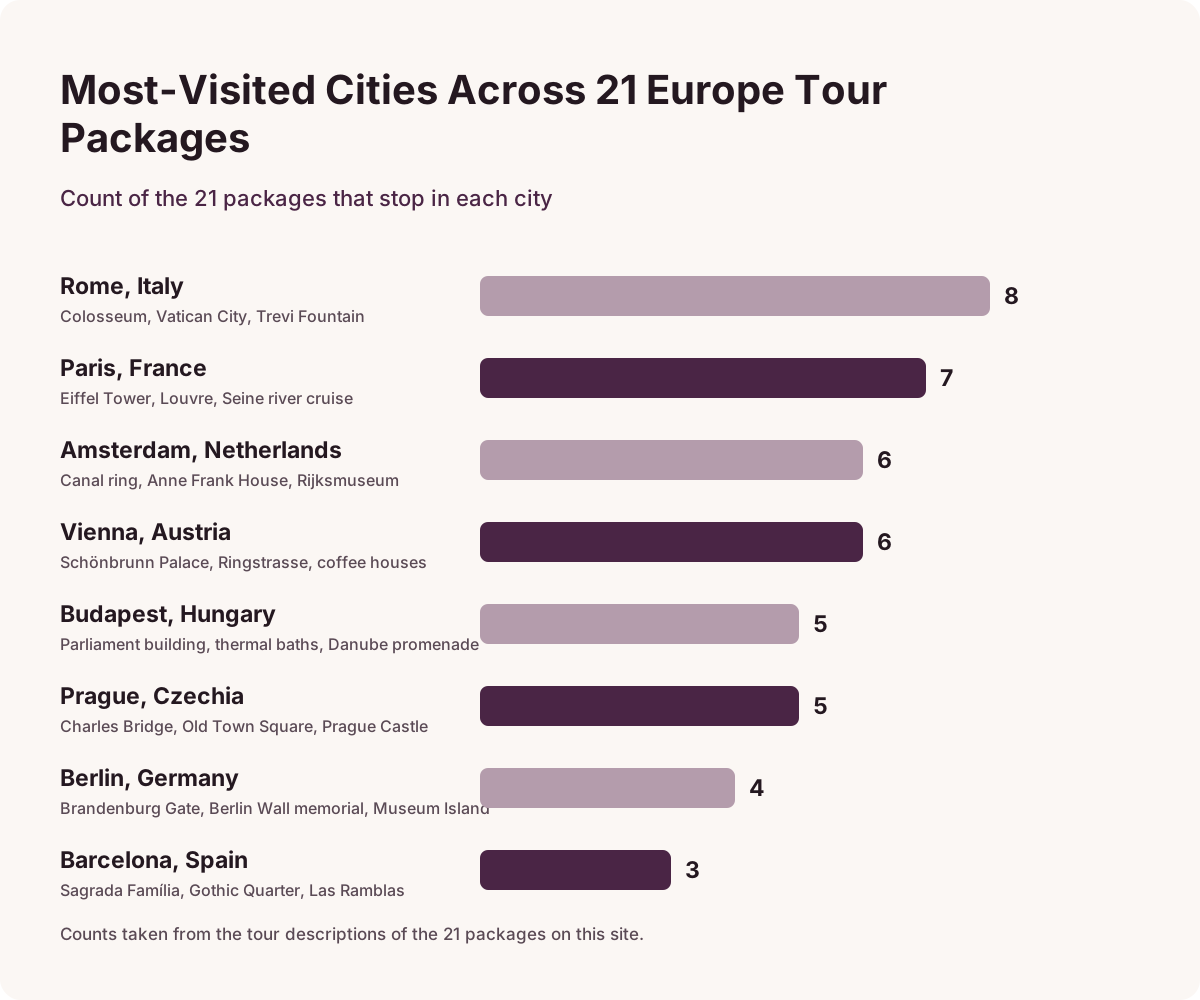
The table below pulls the most-visited cities from the 21 tour descriptions on this site. It is not a ranking of quality; it is a count of how many packages stop there, which tells you what the operators themselves consider essential.
| City | Country | Packages That Include It | Typical Sight |
|---|---|---|---|
| Rome | Italy | a stop on several itineraries | Colosseum, Vatican City, Trevi Fountain |
| Paris | France | 7 | Eiffel Tower, Louvre, Seine river cruise |
| Amsterdam | Netherlands | 6 | Canal ring, Anne Frank House, Rijksmuseum |
| Vienna | Austria | 6 | Schönbrunn Palace, Ringstrasse, coffee houses |
| Budapest | Hungary | 5 | Parliament building, thermal baths, Danube promenade |
| Prague | Czechia | 5 | Charles Bridge, Old Town Square, Prague Castle |
| Berlin | Germany | 4 | Brandenburg Gate, Berlin Wall memorial, Museum Island |
| Barcelona | Spain | 3 | Sagrada Família, Gothic Quarter, Las Ramblas |
A tour that hits four or five of these cities in two weeks is a solid introduction. The ones that try to squeeze in eight or nine tend to trade depth for distance, which suits some travellers and frustrates others. The difference is in the daily pacing, a topic the site covers in a separate look at group size and daily pacing on Europe coach tours.
Which Natural Wonders Should You Prioritise On A Two-Week Trip?
For a two-week trip, prioritise one or two major natural regions rather than trying to see them all: pair the Norwegian fjords with a Scandinavian capital, or combine the Swiss Alps with nearby lakes and a short city stay, since most broad multi-country tours use only a single Alpine pass or coastal drive as a brief scenic break between cities.
The 21 packages on this site split into two camps on this question. The Scandinavia and Baltics group (three tours) puts nature at the centre: the fjords, the mountains and the open road are the point. The Western Europe Classics group (eight tours) treats nature as a highlight between urban stops, a day in the Swiss Alps or a morning on the Italian Lakes. Neither approach is wrong, but they suit different travellers.
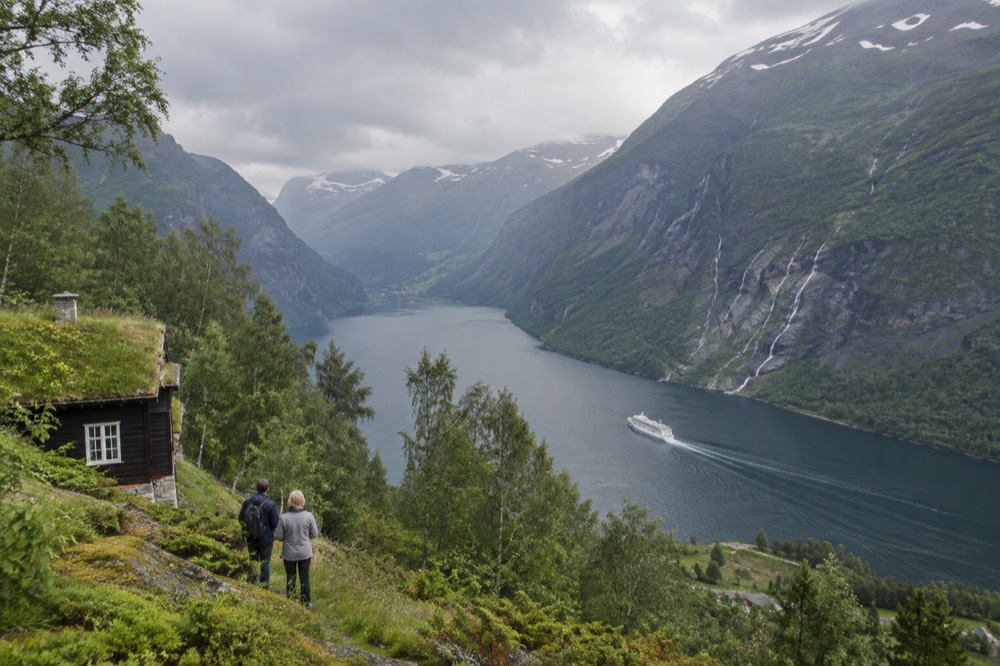
The table below lists the natural sites that appear most often in the tour descriptions, along with the number of packages that stop there and what a typical visit looks like.
| Natural Site | Country | Packages | Typical Experience |
|---|---|---|---|
| Swiss Alps (Jungfrau, Lucerne, Interlaken) | Switzerland | 8 | Mountain railway, panoramic views, short walks |
| Norwegian Fjords | Norway | 3 | Scenic cruise, waterfall stops, photo viewpoints |
| Plitvice Lakes National Park | Croatia | 3 | Boardwalk trails past turquoise lakes and waterfalls |
| Italian Lakes (Como, Garda) | Italy | 2 | Lakeside town stroll, boat ride, gelato stop |
| Scottish Highlands | United Kingdom | 2 | Loch-side drive, castle ruin, whisky distillery visit |
| Bavarian Alps (Neuschwanstein) | Germany | 4 | Castle tour, mountain backdrop, short hike |
A tour that includes the Swiss Alps gives you a day of mountain air between city stays. A tour built around the Norwegian fjords gives you several days of it and fewer museums. The right pick depends on whether you want nature as a highlight or as the main event. If you are still deciding between a coach tour and a rail pass, the comparison at rail pass versus coach tour across Europe lays out the trade-offs.
How Do Multi-Country Tour Packages Connect Europe's Best Places?
Multi-country tour packages connect Europe's best places by coach on fixed geographic loops, with overnight stops in a different city or town most nights. One Western Europe circuit runs from London through Paris, Switzerland, Italy, Austria, Germany and the Netherlands, while a Balkans route travels from Athens to Dubrovnik through the former Yugoslav countries. The operator sets the stops, hotels and border order, so you simply choose the loop that matches your list.
The country counts tell the story. Five of the 21 packages cross exactly eight countries, the widest single tour reaches ten, and the narrowest covers just two. A high country count sounds impressive on a brochure, but it means shorter stays in each place and more hours on the road. The table below groups the packages by the number of countries they visit.
| Countries Visited | Number of Packages | Example Tour |
|---|---|---|
| 2 to 3 | 3 | Best of Scandinavia (3 countries) |
| 4 to 6 | 6 | Balkan Explorer (6 countries) |
| 7 to 8 | 7 | Europe Escape (7 countries) |
| 9 to 10 | 5 | Taste of Europe (8 countries) |
The tours that cover the most ground in two weeks are the ones that move fast and start early. A package like Classic Europe, which runs a London round-trip through nine countries, fits a full day of sightseeing into each stop by keeping travel distances manageable. Check availability on the operator's listing for the exact departure dates and the day-by-day route.
The Balkan Explorer takes a different approach. It starts in Athens and works north through ten countries, spending more time in each and crossing fewer borders per day. The pace is slower, the cities are less famous, and the landscapes are wilder. That contrast is worth understanding before you book, because a tour that feels perfect for one traveller can feel like a missed opportunity to another.
Which Regions Deliver The Most Cultural Depth In A Short Visit?
Central and Eastern Europe deliver the most cultural depth in a short visit, with Prague, Budapest, Kraków and Vienna close enough for a coherent 14-day route, and their architecture, food and history distinct at every stop, while packages start at $2,249 per person, well below the $3,235 median across all 21 tours.
The reason is partly economic and partly historical. Hotel costs, meal costs and local guide fees are lower in the Czech Republic, Hungary and Poland than in France or Switzerland, and that flows through to the package price. The tours themselves are not stripped-down budget trips; they include the same coach transport, the same guided walks and the same breakfasts as the Western loops. The difference is where the coach goes.
The table below compares the cultural focus of the three main regions covered by the 21 packages.
| Region | Packages | Typical Cultural Highlights | Price Range (per person) |
|---|---|---|---|
| Western Europe Classics | 8 | Renaissance art, Roman ruins, Gothic cathedrals, café culture | $2,110 to $5,085 |
| Central & Eastern Europe | 3 | Habsburg palaces, communist history, thermal baths, folk traditions | $2,249 to $4,025 |
| Balkans & Adriatic | 5 | Ottoman bazaars, Orthodox monasteries, Yugoslav memorials, coastal old towns | $2,517 to $5,242 |
A tour through the Balkans, like the Balkan Explorer or the small-group Balkan Extended, layers Ottoman, Austro-Hungarian and Yugoslav history on top of each other in a way no Western loop can. The old towns of Mostar, Sarajevo and Kotor feel different from the Baroque squares of Salzburg or the Renaissance piazzas of Florence, and that variety is the point.
The Taste of Europe package splits the difference: it starts in Paris and loops through France, Italy, Monaco, Switzerland, Germany and more, touching both Western icons and lesser-visited corners in a single 14-day run. The route covers eight countries, which is the most common country count across all 21 packages, and the price sits at the lower end of the range at $2,238.12 per person.
What Does A Typical 14-Day Europe Tour Itinerary Look Like?
A typical 14-day Europe tour itinerary strings together six to eight countries with one or two nights in each major city. The coach moves every second or third day, the mornings are guided sightseeing, the afternoons are free time or optional excursions, and the evenings are either group meals or independent exploration. The exact rhythm varies by operator, but the broad shape is consistent across all 21 packages on this site.
The day count is the most reliable predictor of pace. Eleven of the 21 packages run exactly 14 days, which is long enough to cover a loop from London to Rome and back, or from Athens to Dubrovnik, without feeling like a forced march. The infographic below shows which countries appear most often across those 14-day loops.
The country counts are not a measure of quality, but they are a measure of what the operators believe sells. A package that skips Austria or Germany is making a deliberate choice, usually to spend more time in a smaller region. The Balkan Explorer, for example, visits six countries, none of which are Austria or Germany, and that is the whole appeal.
How Much Does It Cost To Visit Europe's Best Places On A Package Tour?
The 21 packages on this site range from $2,110 to $5,265 per person, with a median of $3,235. The price per day runs from $151 at the cheapest end to $437 at the most expensive. The biggest cost drivers are the region, the season, the group size and the accommodation tier, not the number of countries visited.
A higher country count does not automatically mean a higher price. The Taste of Europe tour covers eight countries and costs $2,238.12, while the Country Roads of Bavaria, Switzerland and Austria covers just three and costs $5,085. The difference is in the hotels, the included meals and the optional excursions, not the number of border crossings.
The table below groups the packages by price bracket and shows what you can expect at each level.
| Price Bracket (per person) | Number of Packages | Typical Region | What You Get |
|---|---|---|---|
| $2,110 to $2,665 | 6 | Central/Eastern Europe, budget Western loops | Coach transport, basic hotels, some meals, guided walks |
| $2,835 to $3,804 | 8 | Western Europe Classics, Britain & Ireland | Mid-range hotels, more included meals, optional excursions |
| $4,025 to $5,265 | 7 | Premium Alps, small-group Balkans, Scandinavia | Higher-end hotels, smaller groups, more inclusions |
The cheapest packages are not necessarily the best value for every traveller. A budget Western Europe loop at $2,238.12 still covers the same cities as a premium one at $5,085, but the hotels are simpler, the included meals are fewer and the optional excursion list is longer. The hidden costs of those optional add-ons are unpacked in the guide to optional excursions and hidden costs on Europe tours.
What Entry Rules Should You Know Before Booking A Europe Tour?
US, Canadian, Australian and British passport holders need no visa for a short stay in Schengen area, but two new systems are changing border experience. Entry/Exit System (EES) has been fully operational since 10 April 2026 and replaces manual passport stamping with biometric registration. European Travel Information and Authorisation System (ETIAS) is expected in last quarter of 2026 but is not yet collecting applications. A 14-day tour uses a small fraction of the 90-day Schengen allowance.
The Schengen area covers 29 countries, including all the Western and Central European destinations that appear most often on the 21 packages. The United Kingdom and Ireland are not in Schengen, and neither are Serbia, Bosnia and Herzegovina, Montenegro, Albania, North Macedonia or Kosovo. A Balkans tour that crosses into Croatia, which is a Schengen member, triggers an EES registration each time it crosses that external border.
Passport validity is the rule that catches people. Schengen law requires a passport to be valid for at least three months after the intended departure date and issued within the previous ten years. Two major operators, Contiki and Intrepid, go further and require six months of validity beyond the trip return date. Six months is the safe number to aim for, regardless of which tour you book. The full legal details are laid out in the official Schengen Borders Code.
Travel insurance is not a legal Schengen entry condition for visa-free visitors, but it is a contractual requirement of three of the four major operators on this site. Intrepid, Expat Explore and G Adventures all make insurance mandatory and will ask for proof on day one. Contiki only recommends it. The UK government's travel advice for France notes that border guards may still ask to see proof of insurance even when it is not a legal requirement, so carrying a policy is sensible regardless of the operator's stance.
The UK now requires an Electronic Travel Authorisation (ETA) for visitors from the US, Canada, Australia and the EU. It costs £20 and is needed even for a transit through UK border control. A London-start tour means you need both an ETA and, once ETIAS launches, an ETIAS authorisation. The official UK ETA guidance explains who needs one and how to apply.
Which Tour Package Gives You The Broadest Taste Of Europe?
The Taste of Europe eight-country tour covers France, Italy, Monaco, Switzerland, Germany, the Netherlands, Belgium and Luxembourg in 14 days, starting and ending in Paris. At $2,238.12 per person, it is one of the most affordable ways to see a large slice of the continent on a single coach loop. The route touches four of the top five most-visited countries on this site and includes stops in Paris, Rome, Florence, Venice, Lucerne and Amsterdam.
The trade-off is pace. Eight countries in 14 days means some stops are short, and the coach hours add up. The listing states the day-by-day itinerary, and reading it carefully before booking tells you whether you will get a full afternoon in Florence or a whistle-stop photo break. The operator's own reviews note that the tour is fast but well-organised, and the included city walks give you the orientation you need to explore on your own during free time.
For a slower, more immersive alternative, the Balkan Explorer takes 16 days to cover six countries, spending more time in each and reaching places like Sarajevo and Kotor that the Western loops skip entirely. The Classic Europe tour runs a London round-trip through seven countries at a moderate pace, with a 4.6 rating across 309 reviews. Each of these three approaches suits a different traveller, and the right one depends on whether you value breadth, depth or a balance of both.
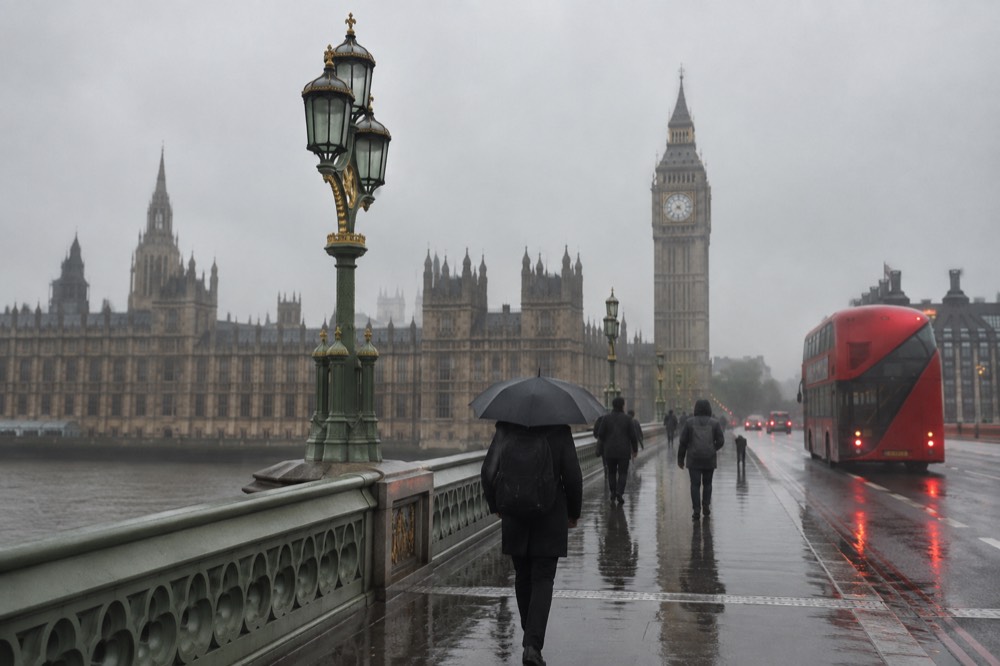
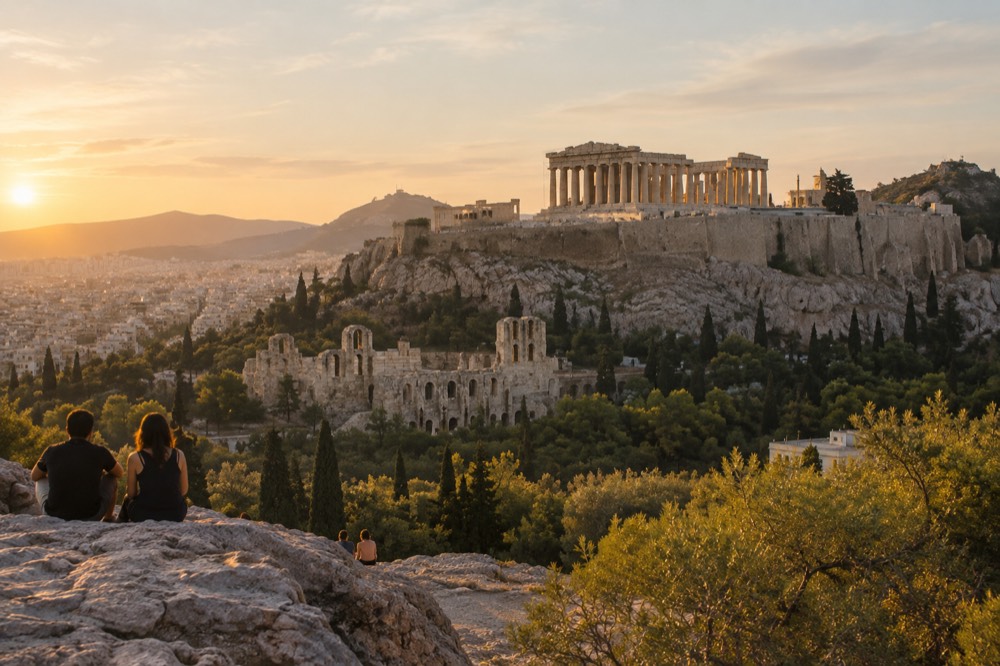
The Balkan Explorer, meanwhile, runs Athens to Athens, while the semi-private tour ends in Sarajevo or Belgrade, depending on the departure. The route includes the Acropolis, the monasteries of Meteora, the old town of Ohrid and the bridge of Mostar, a sequence of sights that feels completely different from the Paris, Rome, and Amsterdam axis. The price starts at $2,665, and the group size is on the operator's listing.
Common Questions About The Best Places To Visit In Europe
What Is The Number One Best Place To Visit In Europe?
There is no single answer that fits every traveller, but across the 21 packages on this site, Rome appears most often as a stop. Italy as a whole sits on eight itineraries, tied with Switzerland and behind only Austria and Germany. For a first-time visitor, a route that includes Rome, Paris and Amsterdam covers three of the continent's most-visited cities in a logical geographic loop.
Which European Country Is The Most Beautiful?
Beauty is subjective, but the tour operators on this site vote with their itineraries. Switzerland appears on eight packages, nearly all of them for its Alpine scenery. Norway's fjords draw three dedicated tours. Croatia's coastline and Plitvice Lakes appear on three Balkan itineraries. The country that gets the most consistent praise for natural beauty in guest reviews is Switzerland, but the Norwegian fjords and the Croatian coast are close behind.
What Is The Best Month To Visit Europe?
No single month is best for every traveller, but the departure calendars of the 21 packages on this site cluster around May, June, September and October. Fourteen tours offer May departures, fourteen offer September departures, and twelve offer June departures. February appears on none of the 21, and January, November and December appear on only a handful. Late spring and early autumn give you long daylight hours, mild weather and fewer crowds than the July to August peak.
How Many European Countries Can You Realistically Visit In Two Weeks?
Six to eight countries is the realistic range for a 14-day coach tour. Five of the 21 packages on this site cross exactly eight countries, and the widest reaches ten. A higher country count means shorter stays in each place and more time on the road. The tours that stay in the four-to-six-country range tend to give you two or three nights in the major cities and a slower overall pace.
Is It Worth Going To Europe For Only Two Weeks?
Yes, and the 21 packages on this site are designed around that exact length. Eleven of them run exactly 14 days, and they pack a coherent route into that window without feeling rushed. A two-week trip is long enough to see four or five major cities, cross several borders and still have a couple of slower days. The key is picking a loop that does not try to do too much, because a tour that promises ten countries in 14 days will spend more time on the coach than in the places you came to see.