Is It Better To Go On A Tour Or On Your Own?
A data-driven comparison of escorted Europe tour packages versus independent travel, covering real costs, logistics, and what you actually get for your money across 21 verified multi-country itineraries.
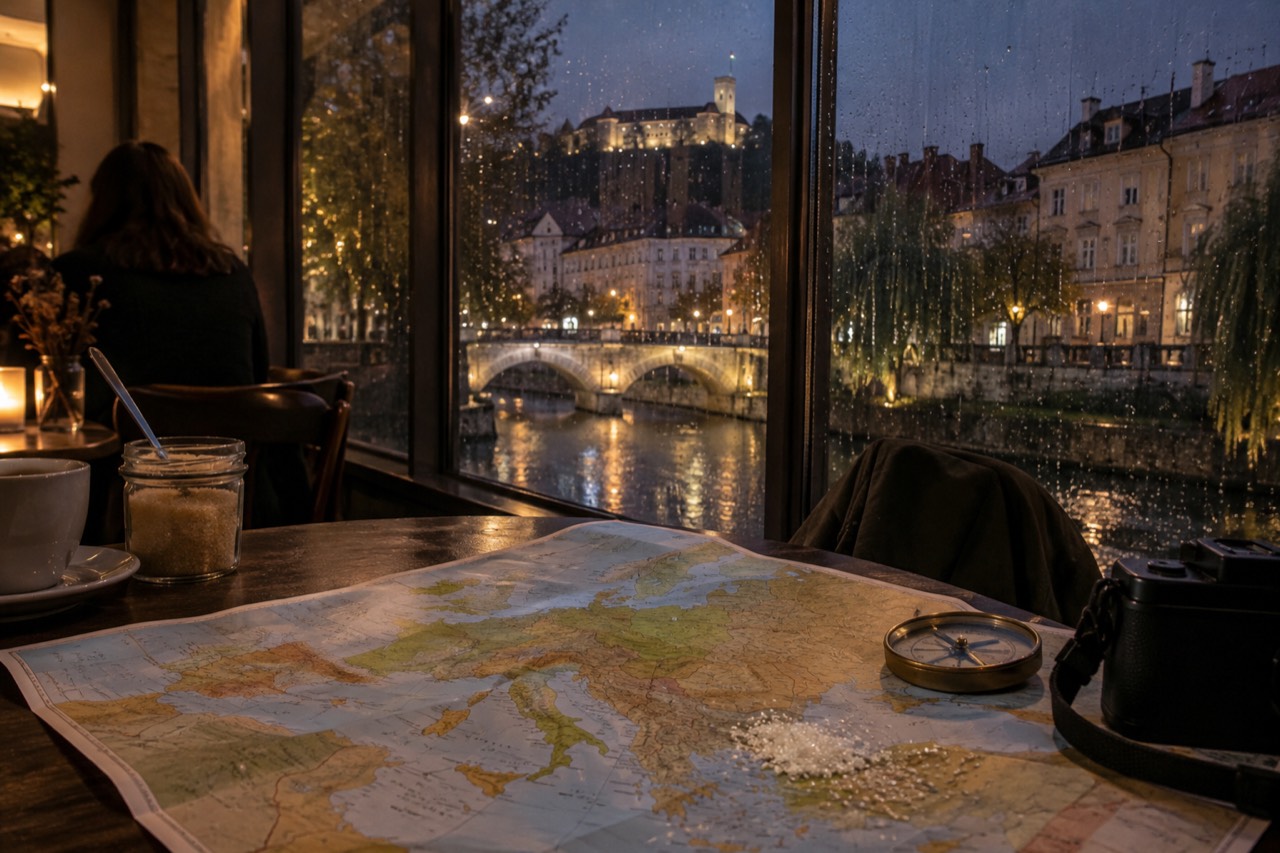
Every Europe trip starts with the same fork in the road. One path hands the entire itinerary to a tour operator: a coach seat, a guide, a string of hotel rooms, and a fixed schedule that runs whether you feel like moving or not. The other path puts you in charge of every train ticket, museum queue, and dinner reservation. Both can deliver a memorable two weeks. The question is which one fits the kind of traveller you actually are, and the answer sits in the numbers.
Across the 21 multi-country Europe packages listed on 14 Days Europe Tour Packages, the price span runs from $2,110 to $5,265 per person, with a median of $3,235. That covers accommodation, internal transport between countries, and some meals on 19 out of 21 itineraries. International flights are never included. A self-planned trip covering the same ground spends the same airfare but then breaks into dozens of separate bookings, each with its own cancellation terms and its own claim on your time. The tour bundles those bookings into one contract. Whether that bundle is a bargain or a premium depends on what you value most: money, time, or control.
Is It Better To Go On A Tour Or On Your Own?
An escorted tour is better if you want to offload logistics and have a guide handle border rules and photo stops, while solo travel wins if you value complete freedom over your schedule and are willing to be your own fixer for every missed connection and closure.
The 21 tours on this site span 12 to 16 days, and 11 of them run exactly 14 days. That two-week window is the most common length because it fits into a standard North American or Australian holiday block and covers enough ground to feel like a proper circuit without exhausting everyone. On a tour, the operator has already solved the puzzle of how to get from Amsterdam to the Swiss Alps to Venice without losing a day to a missed connection. On your own, you solve that puzzle yourself, and the quality of your trip depends on how well you do it.
The cost per day on a package lands between $151 and $437, with ten of the 21 tours sitting between $150 and $230 a day. That figure bundles a hotel bed every night, travel between countries, a chunk of your meals, and the guide’s expertise. A self-booked trip can certainly come in lower if you choose hostels and cook your own meals, or it can soar past the top of that range if you prefer boutique hotels and sit-down dinners. The tour price is a known quantity. The independent price is a variable you control, but it also carries the risk of a budget blowout if a train strike forces an expensive last-minute hotel or a missed ferry strands you overnight.
One of the strongest arguments for a tour is the safety net. When a hotel overbooks, the guide finds another one. When a border crossing takes longer than expected because the Entry/Exit System is scanning every passport, the coach waits. The EU’s Entry/Exit System has been fully operational at all external Schengen border crossing points since 10 April 2026, and manual passport stamping for short stays ended on that date. On your own, a slow border crossing means you might miss the next train, and no one is holding it for you. On a tour, the schedule absorbs that friction.
What Does A Two-Week Europe Tour Actually Include?
A typical 14-day Europe tour package bundles accommodation every night, internal transport between the countries on the itinerary, a tour guide, and a selection of meals, usually breakfast daily plus a handful of group dinners. International flights are never part of the headline price, and optional excursions, most lunches, tips, and travel insurance sit outside the package. Exactly 19 of the 21 tours on this site include accommodation and some meals, and 19 include all internal transport between countries.
When you book a tour, you are paying for the operator to stitch together a multi-country route that works. The Schengen area now spans 29 countries, and a well-designed itinerary threads through them without bouncing in and out of the zone more than necessary, because each external border crossing triggers an EES registration. A self-planned trip that hops between Schengen and non-Schengen countries, say from Croatia into Bosnia and back again, can eat up time at the border twice. A tour operator builds that into the schedule. You may not even notice it from your coach seat.
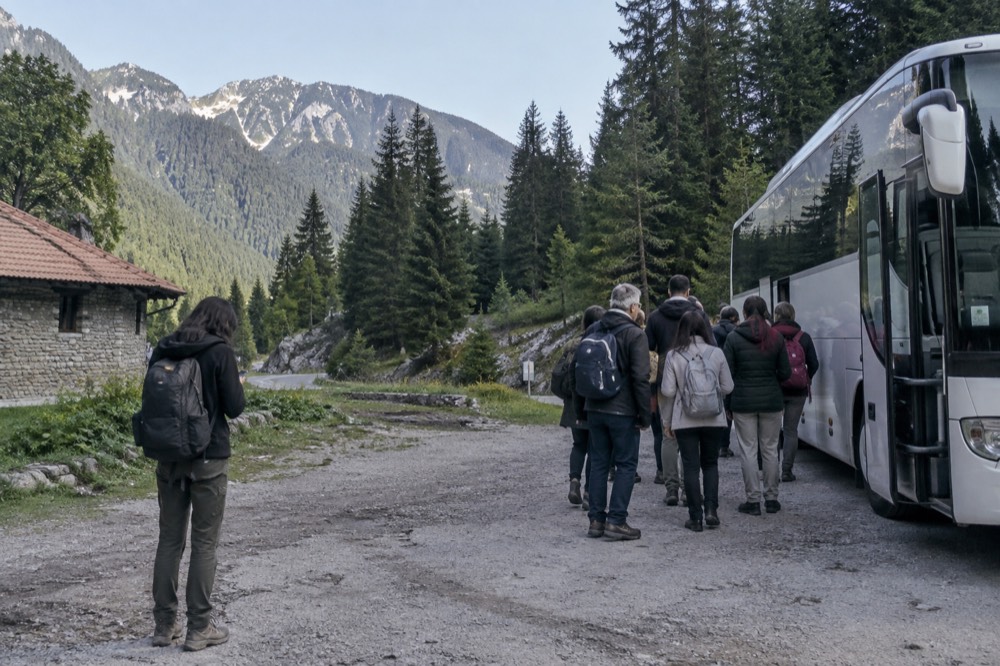
What a tour does not include is just as important. On all 21 listings, international flights are the traveller’s own cost. The operators’ own product pages list flights in the not-included block. That means the $3,235 median land price is what you pay for the ground arrangement, and the long-haul ticket is a separate purchase you make yourself. The same is true for travel insurance: it is never bundled into the price, and several operators make it a hard condition of joining the trip. We will come back to that.
How Much Does A 14-Day Europe Tour Cost Compared To Going Solo?
The median land price across the 21 packages on this site is $3,235 per person, roughly $230 per day. Ten of the 21 tours sit between $150 and $230 per day, covering a hotel bed, intercity transport, and some meals. A solo traveller booking equivalent mid-range hotels and train tickets can spend a similar amount, but every component is priced separately and subject to seasonal swings. The tour locks in one price; the independent trip locks in dozens.
The cheapest package on the roster starts at $2,110 per person, and the most expensive reaches $5,265. That spread exists because the itineraries themselves are different: a 12-day budget coach circuit through Eastern Europe costs less than a 14-day small-group tour through Scandinavia’s fjords, where accommodation and ferry crossings are pricier. The daily cost of the land package ranges from $151 at the low end to $437 at the high end. A self-planned trip can certainly beat $151 a day if you stay in hostels, cook your own meals, and use advance-purchase rail passes, but it can also blow past $437 a day in cities like Zurich or Copenhagen without much effort. The tour price gives you a ceiling. The independent price gives you a floor that you can easily break.
| Tour | Price (Per Person) | Days | Cost Per Day | Rating | Reviews |
|---|---|---|---|---|---|
| European Whirl (End Paris) | $3,804 | 14 | $272 | 4.7 | 58 |
| Classic Europe | $3,185 | 14 | $228 | 4.6 | 309 |
| Scenic Scandinavia and its Fjords | $5,265 | 14 | $376 | 4.4 | 29 |
The three tours in the table above show how the daily rate shifts with the region. Western Europe classics like European Whirl and Classic Europe run in the $230 to $270 per day range. A Scandinavia itinerary, where distances are longer and everything from a coffee to a hotel room costs more, pushes past $370 a day. On your own, you would face the same regional price differences, but you would also need to research and book each leg separately.
One thing a tour price does not do is fluctuate by month. The roster records exactly one price per package, and no verified source on this site prices these tours by departure date. So you cannot assume a November departure costs less than a June one. An independent trip, by contrast, is directly exposed to seasonal hotel and rail pricing, which can halve or double the cost of the same room depending on the month.
A useful sibling read is our breakdown of Europe tour package costs and what sits inside the headline number, which pulls apart the inclusions line by line.
How Does The Daily Pace Of An Escorted Tour Compare To Solo Travel?
An escorted tour runs on a fixed schedule with early departures, timed stops and a set number of nights in each city. You cover a lot of ground quickly but rarely get to linger. Independent travel lets you decide whether to spend three hours or three days somewhere, at the cost of building every connection yourself. The trade-off is depth against breadth.
The 21 packages on this site cross between 2 and 10 countries, and five of them cover exactly 8 countries. That means a typical day involves a morning drive, a guided stop in a town or at a viewpoint, an afternoon arrival in the next city, and a free evening. You might spend two nights in a major city like Paris or Rome, but many stops are single overnighters. If your idea of travel is to wander a neighbourhood until you find a café that feels right and then stay for three hours, a tour will frustrate you. If your idea of travel is to tick off the Eiffel Tower, the Swiss Alps, and the canals of Venice in one trip without once opening a train timetable, a tour delivers exactly that.
The group itself is another pacing factor. None of the 21 listings publish a maximum group size, so you will not know how many people you are sharing a coach with until you read the operator’s own listing. One product, a semi-private Balkans tour, caps at 10 travellers. The other 20 are joined group departures. A larger group means more time spent loading and unloading, more bathroom stops, and a pace set to the slowest member. On your own, you move at your own speed, but you also carry your own bag up every staircase and figure out every metro map alone.
A tour like European Whirl, which starts in London and ends in Paris, crosses nine countries in 14 days. That is a new country roughly every two days. On your own, covering the same ground would require booking seven separate train or bus tickets, seven different hotels, and complying with the passport validity rules that apply at each border. The tour coach handles all of that while you sleep or look out the window.
What Are The Hidden Costs Of A Package Tour?
Beyond the advertised price, package tours often hide costs like optional excursions, meals outside the itinerary, mandatory tips for guides and drivers, and a single supplement for solo travelers wanting a private room. Travel insurance is rarely included yet frequently required, adding another expense before you can even board the coach.
Optional excursions are the most variable extra. A tour might include a walking tour of a city centre but charge separately for a palace entry, a boat cruise, or a wine tasting. Those add-ons are priced on the operator’s listing and can run from $30 to over $100 per activity. On an independent trip, you pay those same entry fees directly, but you also choose which ones matter to you. On a tour, the group often moves as a bloc toward the optional activity, and skipping it can leave you with an empty afternoon in a town with nothing else planned.
The single supplement is another cost that catches solo travellers. No verified single-supplement figure exists for any of the 21 tours, so the exact amount sits on the operator’s listing. The principle is simple: the package price assumes two people sharing a room. If you want a room to yourself, you pay extra. On an independent trip, you always pay the full room rate, so there is no supplement to calculate, but you also cannot split the cost with a travel companion you meet on day one.
| Operator | Insurance Requirement | Minimum Coverage | Proof Required |
|---|---|---|---|
| Intrepid Travel | Mandatory | US$200,000 recommended minimum per category | Policy number and 24-hour emergency number on day one |
| Expat Explore | Condition of booking | Adequate cover, amount not stated | Proof required before the tour starts; no boarding without it |
| G Adventures | Mandatory | US$200,000 emergency evacuation and repatriation | Proof on day one |
| Contiki | Highly recommended, not required | Not specified | Not required |
The insurance table above is drawn directly from the operators' own published booking conditions. Three of the four major operators on this roster require insurance as a condition of travel. Contiki is the outlier: its August 2026 booking conditions across all four regions say insurance is “highly recommended,” not required. That difference alone can steer a traveller who does not want to buy a policy toward a Contiki trip, or toward an independent journey where insurance is a personal choice, not a gate.
Our guide to optional excursions and the real extras on Europe tours walks through each line item in more detail.
Which European Countries Are Hardest To Visit Independently?
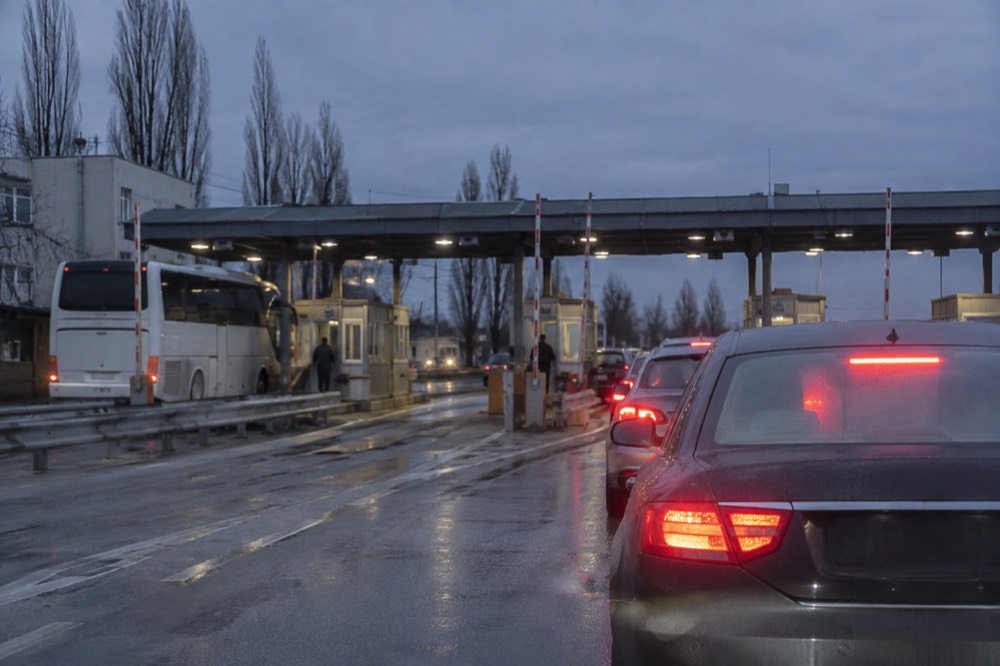
The countries outside the Schengen zone, particularly in the Balkans, add border complexity that a tour absorbs but an independent traveller must handle alone. Serbia, Bosnia, Montenegro, Albania, North Macedonia, and Kosovo are not Schengen members, so crossing into Croatia triggers a full external border check. On a multi-stop Balkans loop, that can mean two or three EES registrations in a single trip. A tour coach has a dedicated lane and a guide who knows the drill.
The Entry/Exit System has been fully operational at all external Schengen borders since 10 April 2026. Every non-EU traveller crossing into the Schengen zone for the first time gives a facial image and fingerprints. On a tour, that happens once, at the first Schengen entry point, and the guide has built the extra wait into the schedule. On your own, you stand in the same queue but with no one to explain the delay to the car rental desk or the bus driver on the other side.
Language is the other practical barrier. A tour guide translates menus, negotiates with a hotel front desk, and knows which pharmacy is open on a Sunday. In a country like Serbia or Bulgaria, where English is less widely spoken outside tourist centres, that support can be the difference between a smooth trip and a stressful one. In Western Europe, the language barrier is lower, but the logistics of stitching together seven countries in 14 days still require a level of planning that many travellers underestimate.
Do You Need Travel Insurance For A Self-Planned Europe Trip?
Schengen law does not require travel insurance for visa-free visitors from the US, Canada, Australia, or the UK. The five entry conditions in the Schengen Borders Code do not mention insurance. However, border guards in France and Italy may ask to see proof of coverage, and several tour operators make insurance a hard contractual condition. On a self-planned trip, the choice is yours, but the financial risk of travelling without it sits entirely on your shoulders.
The legal position is clear. The Schengen Borders Code lists exactly five entry conditions for a short stay: a valid passport meeting the validity criteria, a visa where required, proof of the purpose and means of the stay, no SIS alert, and no threat to public policy. Insurance is not among them. The UK Foreign Office, however, warns that French and Italian border officials may still ask to see it, and that is a real practical risk. If you arrive at Charles de Gaulle without a policy and the officer decides to press the point, you could be refused entry, even though the law does not demand it.
On a tour, the operator’s own rules override the legal baseline. As the table in the previous section shows, Intrepid, Expat Explore, and G Adventures all require insurance and will deny boarding without proof. Contiki only recommends it. If you book a Contiki trip and choose to travel uninsured, you are not breaking any law, but you are carrying the full cost of a medical evacuation or a cancelled trip yourself. Our guide to travel insurance for escorted Europe tours unpacks each operator’s fine print.
A tour like Classic Europe, which loops from London through France, Switzerland, and Italy and back, crosses multiple borders but stays entirely within the Schengen zone and the UK. The insurance question on that trip is purely contractual, not legal, because you never enter a country that requires insurance as an entry condition. On an independent trip covering the same route, you face the same legal landscape, but you also have no operator demanding a policy number on day one.
What Happens If Something Goes Wrong On A Self-Guided Trip?
When a train is cancelled, a hotel loses your reservation, or you fall ill abroad, you are the one who fixes it. An escorted tour has a guide and a 24-hour operations desk whose job is to rebook, reroute, and translate. The cost of that safety net is baked into the tour price. On your own, you carry a phone, a credit card, and the hope that your travel insurance answers the call.
The most common disruptions on a multi-country Europe trip are transport strikes, hotel overbookings, and illness. In France and Italy, rail strikes are frequent enough that seasoned travellers build buffer days into their itineraries. On a tour, the operator has a fleet of coaches and a network of alternative hotels. If the strike blocks a border crossing, the coach reroutes. If a hotel cancels, the guide finds another one before you even know there was a problem. On your own, you are refreshing a booking app at midnight in a train station, competing with every other stranded traveller for the last room in town.
The same applies to medical emergencies. A tour guide knows which hospital to go to and can translate your symptoms. An independent traveller relies on a phone translation app and the goodwill of strangers. Neither scenario is impossible to handle, but one is unquestionably easier, and that ease is part of what the tour price buys.
Common Questions About Traveling Europe On A Tour Versus Independently
Is It Better To Go On A Tour Or On Your Own?
The answer depends on what you value more: convenience and a safety net, or freedom and a lower potential daily cost. A tour hands off logistics and border rules to a guide and locks in one price. Independent travel gives you complete control over your schedule and spending but makes you your own fixer for every problem. Neither is universally better; the right choice is the one that matches your travel style.
How Much Does A 14-Day Europe Tour Cost Compared To Going Solo?
The median land price across the 21 packages on this site is $3,235 per person, or roughly $230 per day, covering accommodation, intercity transport, and some meals. A solo traveller booking equivalent mid-range hotels and train tickets can spend a similar amount per day, but every component is priced separately, and seasonal swings can push the total higher or lower. The tour locks in one price; the independent trip locks in dozens of separate bookings.
What Are The Hidden Costs Of A Package Tour?
Optional excursions, meals not listed in the itinerary, tips for the guide and driver, and a single supplement if you want your own room are the most common extras. Travel insurance is never included, and three of the four major operators on this roster require it as a condition of travel. International flights are also never part of the headline price and must be booked separately.
Do You Need Travel Insurance For A Self-Planned Europe Trip?
Schengen law does not require travel insurance for visa-free visitors from the US, Canada, Australia, or the UK. However, border guards in France and Italy may still ask to see proof of coverage. On a tour, several operators make insurance a contractual condition and will deny boarding without it. On your own, insurance is a personal choice, but the financial risk of travelling without it is yours alone.
Which European Countries Are Hardest To Visit Independently?
Balkan countries outside the Schengen zone, such as Serbia, Bosnia and Herzegovina, Montenegro, Albania, North Macedonia, and Kosovo, add border complexity because crossing into or out of Croatia triggers a full external EES check each time. Language barriers are also higher in parts of Eastern Europe. A tour coach uses dedicated lanes and a guide who handles the paperwork, making these crossings far smoother than they are for an independent traveller.
What Does A Two-Week Europe Tour Actually Include?
A typical package bundles accommodation every night, internal transport between countries, a tour guide, and a selection of meals, usually breakfast daily plus a few group dinners. International flights, most lunches, optional excursions, tips, and travel insurance are not included. Exactly 19 of the 21 tours on this site include accommodation and some meals, and 19 include all internal transport between countries.